
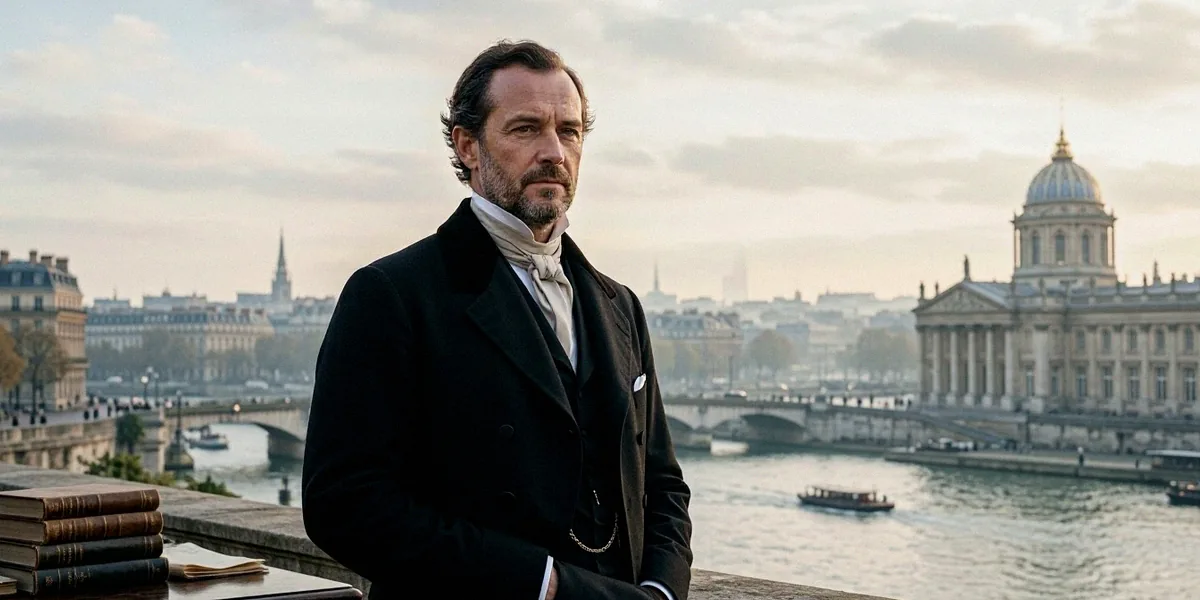
Who Was Louis-Philippe, the Citizen King?
Here at louis-philippe.eu, we’re still captivated by one of the strangest paradoxes in European royal history: a man who fought for the French Revolution as a young duke, then ended up wearing a crown as France’s last king. Louis-Philippe styled himself the “Citizen King,” swapped the fleur-de-lis for the tricolour, and shook hands with the very people who had toppled his cousins. Yet in 1848, the same Parisian crowds that once cheered him sent him packing into exile. His story — bound up with the House of Orléans, the July Monarchy (1830–1848), and his beloved Château d’Eu in Normandy — is exactly why we built this blog. Let’s dig into who he really was.
From Revolutionary Duke to Orléans Heir
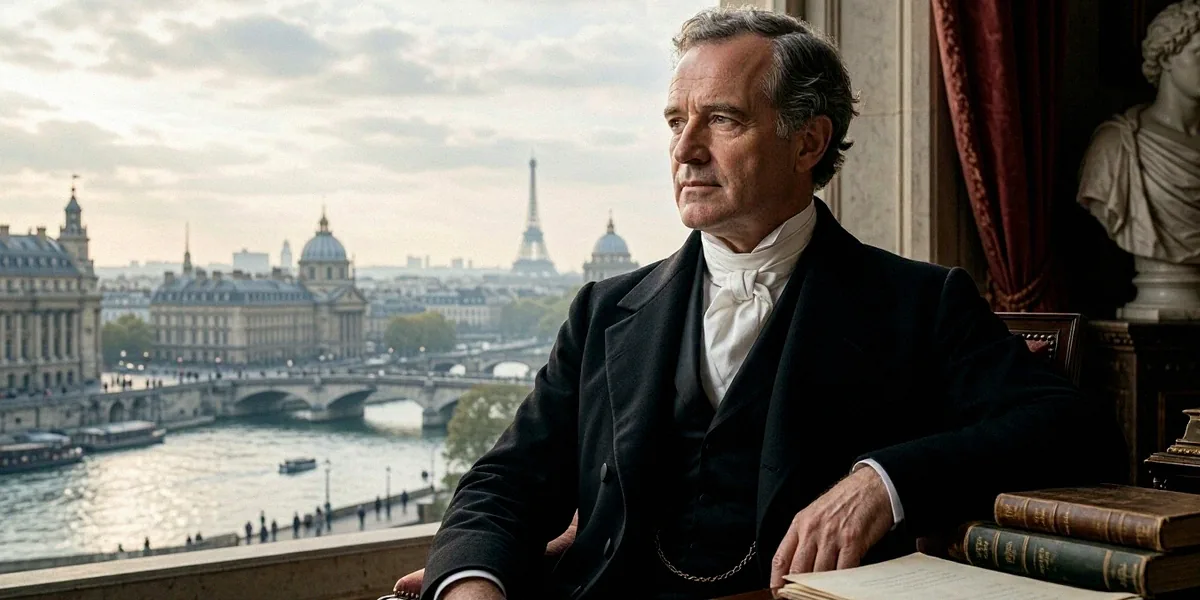
Louis-Philippe was born in 1773 into the House of Orléans, a cadet branch of the Bourbon dynasty descended from Louis XIV’s younger brother. That Bourbon descent gave him a claim to the French throne — but his family’s politics set him apart from the senior line almost from the start.
A Bourbon Cousin with Revolutionary Credentials
As Duke of Orléans, the young prince embraced the ideals of 1789 with genuine enthusiasm. He joined the Jacobin Club, adopted the name “Philippe Égalité” alongside his father, and even served in revolutionary armies. He fought at Valmy and Jemappes in 1792, earning a reputation as a soldier rather than a courtier. When the Revolution turned violent, however, this revolutionary pedigree became a liability as much as an asset — his father voted for the execution of Louis XVI and then went to the guillotine himself in 1793.
Exile, Marriage, and the Orléans Restoration
Louis-Philippe fled France during the Terror and spent years in Switzerland, Scandinavia, and the United States, where he taught mathematics and travelled widely. In 1809 he married Princess Maria Amalia of Naples and Sicily, a match that strengthened his dynastic standing. The Bourbon Restoration in 1814 brought him home, and he was formally recognised as head of the House of Orléans. Under Louis XVIII and Charles X he kept a careful distance from the ultra-royalist court, cultivating instead the image of a modest, approachable, bourgeois prince at his home in the Palais-Royal.
The July Revolution and the Rise of the Citizen King
By 1830, Charles X’s reactionary policies had alienated Paris. The July Ordinances, which suspended press freedom and restricted the franchise, proved the final straw.
Three Glorious Days: July 1830
From 27 to 29 July 1830, the “Three Glorious Days” of the July Revolution saw barricades rise across Paris, the Tuileries stormed, and Charles X forced to abdicate. The revolutionaries wanted a republic, but the moderate liberal deputies feared one. They turned instead to Louis-Philippe, who had stayed in Paris and was seen as a bridge between monarchy and revolution.
A Throne Offered by the People, Not by God
On 9 August 1830, Louis-Philippe took the throne not as “King of France” but as “King of the French,” a title that framed his authority as deriving from the people rather than divine right. The tricolour replaced the white flag of the Bourbons, and the July Monarchy was born. It was a constitutional monarchy with a rewritten Charter, a broader (though still narrow) franchise, and a king who walked the streets of Paris with an umbrella.
Governing the July Monarchy: Reform, Repression, and the Bourgeois King
Louis-Philippe’s eighteen-year reign was a balancing act between liberal reform and conservative order — and it satisfied neither side fully.
The Bourgeois Monarchy and Electoral Reform
His chief minister in the 1840s, François Guizot, embodied the regime’s spirit: liberal in economics, deeply conservative in politics. Guizot’s famous advice to critics — “Enrichissez-vous” (“Get rich”) — captured the government’s alliance with the propertied bourgeoisie. The franchise was expanded in 1831 and 1834, but by 1846 only around 250,000 men out of a population of 35 million could vote. Calls for broader reform were consistently blocked.
Opposition, Insurrection, and the 1848 Revolution
The regime faced repeated unrest throughout the 1830s:
- 1831 and 1834: silk workers’ uprisings in Lyon were crushed by the army
- 1832: a republican insurrection in Paris followed the funeral of General Lamarque
- 1834: the Rue Transnonain massacre damaged the regime’s reputation
- 1835: press censorship laws were tightened after an assassination attempt on the king
Economic crisis in the 1840s, poor harvests, and the corruption scandals of the “Spanish marriages” era eroded support further. When the government banned a reform banquet in February 1848, Paris rose again. Within days, the July Monarchy collapsed.
Louis-Philippe and Château d’Eu: A Royal Home in Normandy
Of all the residences tied to the House of Orléans, none mattered more personally to Louis-Philippe than Château d’Eu in Normandy.
A Normandy Retreat for the Orléans Family
Louis-Philippe first visited Eu as a young exile in 1793 and returned to it throughout his life. After becoming king, he restored the château extensively, transforming it into a comfortable family home and a summer residence for the Orléans family. Unlike Versailles or the Tuileries, Eu felt intimate and domestic — a place where the Citizen King could hunt, walk, and entertain without the ceremonial weight of the court.
The 1843 Entente Cordiale at Eu
Château d’Eu also served as a diplomatic stage. In September 1843, Queen Victoria visited Louis-Philippe at Eu — the first time a reigning British monarch had set foot in France since Henry VIII. The visit sealed the Entente Cordiale between Britain and France and was widely celebrated on both sides of the Channel. Victoria planted a tree, attended a ball, and reportedly charmed the French court. For Louis-Philippe, it was a personal and diplomatic triumph, and it remains the single most famous event associated with the château.
Exile, Death, and the Legacy of the House of Orléans
The 1848 Revolution undid everything. On 24 February 1848, facing certain defeat, Louis-Philippe abdicated in favour of his grandson, the Comte de Paris. The gesture was ignored, and the Second Republic was proclaimed.
Abdication and the Flight to England
Disguised and travelling under the name “Comte de Neuilly,” the former king crossed to England, where he and Queen Maria Amalia settled at Claremont House in Surrey, lent to them by Queen Victoria. He never returned to France. Louis-Philippe died at Claremont on 26 August 1850, surrounded by his family.
The Orléanist Pretenders and Modern Memory
After his death, the Orléanist claim to the French throne passed to his descendants. His grandson Philippe, Comte de Paris, became the leading Orléanist pretender, and the House of Orléans continued to assert its claim through the 19th and 20th centuries. Today, the Orléans name survives as a symbol of constitutional monarchy in France, and Château d’Eu in Normandy — restored, preserved, and open to visitors — remains the most tangible link to Louis-Philippe’s reign.
Frequently Asked Questions
Why was Louis-Philippe called the “Citizen King”?
He adopted the title “King of the French” rather than “King of France,” dressed modestly, walked the streets of Paris, and presented his reign as a constitutional monarchy rooted in popular consent rather than divine right.
What was the July Monarchy?
The July Monarchy was the constitutional regime in France from 1830 to 1848, established after the July Revolution that toppled Charles X and placed Louis-Philippe on the throne.
Where is Château d’Eu and why does it matter?
Château d’Eu is a royal residence in Normandy, France. Louis-Philippe restored it as a family home, and it hosted Queen Victoria’s historic 1843 visit, which cemented the Entente Cordiale between Britain and France.
How did Louis-Philippe’s reign end?
He abdicated on 24 February 1848 during the February Revolution, fled to England under the name “Comte de Neuilly,” and died in exile at Claremont House in Surrey on 26 August 1850.
What is the House of Orléans?
The House of Orléans is a cadet branch of the French Bourbon dynasty, descended from Louis XIV’s brother Philippe. It produced Louis-Philippe and later the Orléanist pretenders to the French throne.
Louis-Philippe remains a contested figure — a king who tried to bridge revolution and monarchy and ended up satisfying neither. His reign left France with railways, colonial expansion, and a strengthened bourgeoisie, but also with a political system too narrow to survive. For us at louis-philippe.eu, his legacy lives on most vividly in Normandy’s Château d’Eu, where the Citizen King’s family life and his diplomatic triumph with Queen Victoria still echo through the halls, and in the enduring story of the House of Orléans.