
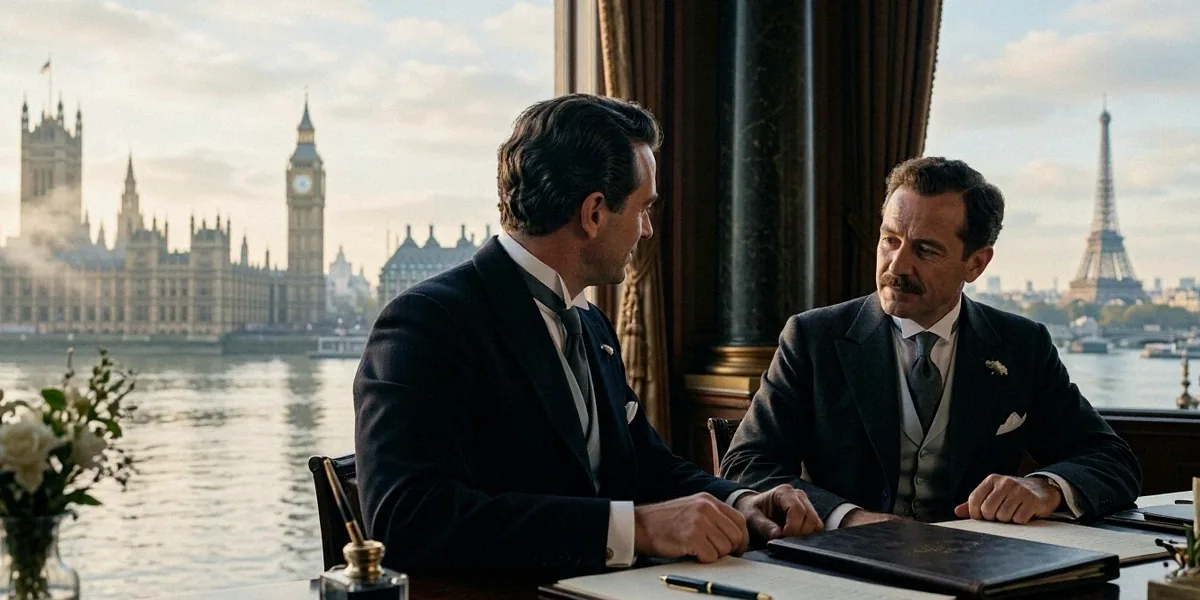
The Early Roots of the Entente Cordiale: Louis-Philippe, the House of Orléans and the Château d’Eu
When Queen Victoria stepped ashore at Tréport in September 1843, she became the first reigning English monarch to set foot on French soil since Henry VIII met Francis I at the Field of Cloth of Gold in 1520. Her host was King Louis-Philippe, the Bourbon-Orléans monarch who had spent years of exile in England and who now welcomed her to his summer home, the Château d’Eu in Normandy. That visit — warm, informal and widely reported on both sides of the Channel — is one of the moments we point to when we trace the early roots of the Entente Cordiale. Long before the 1904 agreement, a French king with English habits and an English queen with a taste for French hospitality were quietly turning centuries of rivalry into something closer to friendship.
Louis-Philippe and the House of Orléans: A New Kind of French Monarchy
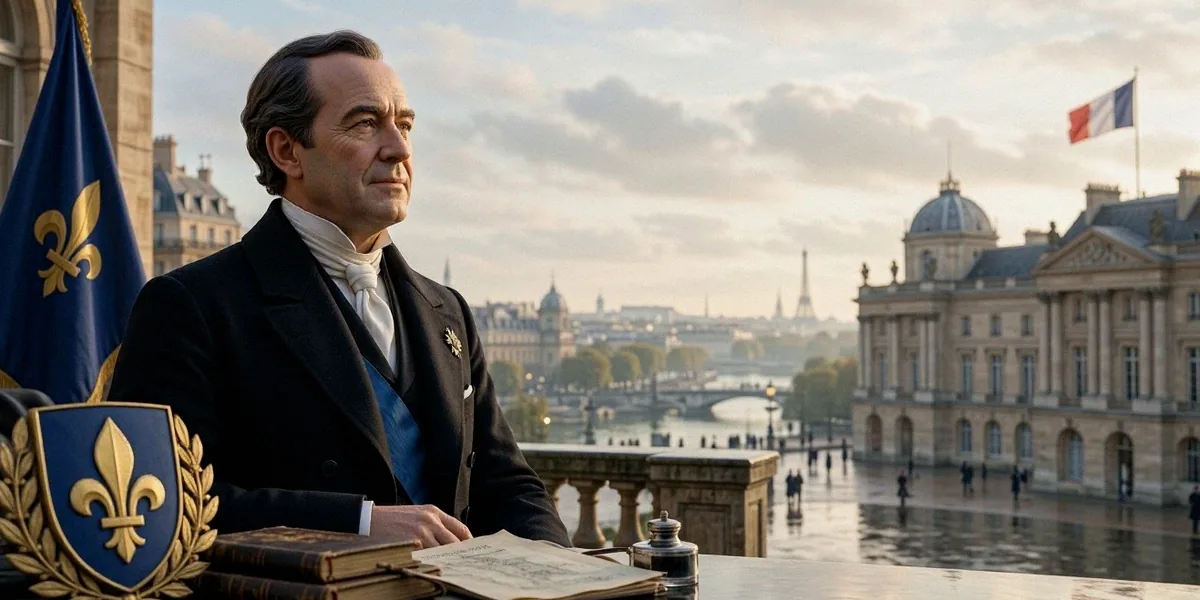
Louis-Philippe was born in 1773 into the Orléans branch of the Bourbon dynasty, a cadet line with a long tradition of dissent from the court at Versailles. His father, Philippe Égalité, voted for the execution of Louis XVI, and the young prince himself fought in the early years of the French Revolution before fleeing the country. His years of exile took him to Switzerland, the United States and, crucially, England, where he lived at Twickenham and elsewhere between 1800 and 1814. There he observed the British constitutional monarchy at close quarters — the working relationship between crown, cabinet and parliament — and came to admire it deeply. That experience shaped everything he later tried to build in France.
The House of Orléans had long been the most anglophile strand of the French royal family. Louis-Philippe’s father had educated his children in Enlightenment ideas, and the family’s political sympathies sat closer to Whig London than to the ultra-royalist circles of the Bourbon Restoration. When Louis-Philippe married Maria Amalia of Naples and Sicily in 1809, the couple settled for years in Palermo and then in England, and their children grew up speaking English as fluently as French. This background mattered enormously once Louis-Philippe took the throne: he was, in effect, the first French monarch since Louis XVI who genuinely understood how a British cabinet worked — and who liked it.
The July Monarchy (1830–1848) was born out of the July Revolution that toppled Charles X. Louis-Philippe was offered the throne not as King of France by divine right but as “King of the French”, a title deliberately borrowed from the constitutional settlement of 1791. He swore to uphold the Charter, ruled with a Chamber of Deputies, and presented himself as a bourgeois monarch — carrying an umbrella, sending his sons to public school, shaking hands in the street. In practice the regime never fully reconciled revolutionary and royalist traditions; the suffrage remained narrow and opposition grew. But as an experiment in bridging those two Frances, the July Monarchy set the template for a monarchy that could, in principle, be Britain’s partner rather than its rival.
The Château d’Eu: A Royal Stage for Cross-Channel Diplomacy
The Château d’Eu sits in Normandy, a short sail from the Sussex coast and within easy reach of Paris. Louis-Philippe acquired it in 1821 and spent much of the following two decades restoring it, filling it with paintings and furniture, and turning it into a summer residence where the court could escape the heat and politics of the capital. Normandy’s proximity to England made it ideal for cross-Channel diplomacy: British guests could arrive by steamer at Tréport or Le Havre with little ceremony. What the king created at Eu was not merely a country house but a diplomatic stage — a place where the informal setting of a family visit could do work that formal embassies could not.
The guest list at Eu reads like a Who’s Who of British politics and society in the 1830s and 1840s. Statesmen, ambassadors and members of the Whig aristocracy were regular visitors, and Louis-Philippe delighted in showing them his collection, his park and his family. The king spoke fluent English with a slight accent, told stories about his Twickenham years, and made a point of serving dishes his English guests would recognise. The dining room at Eu, with its long table and Normandy windows open to the sea air, became one of the earliest informal Anglo-French summits.
The high point came in September 1843, when Queen Victoria and Prince Albert sailed to Tréport and travelled to Eu for a five-day stay. Victoria was twenty-four, recently married, and enchanted by the French king, whom she described in her journal as “very civil & amiable”. The visit included dinners, walks in the park, a visit to a local church and a review of troops. It was covered extensively by the British press, and the image of the young queen and the elderly French king strolling together through a Normandy garden did more for Anglo-French goodwill than any treaty of the period. Crucially, Victoria and Albert got on with Louis-Philippe’s family as well: the Orléans princes and princesses became genuine friends of the British royal couple, and the correspondence lasted for years.
From Rivalry to Friendship: The Diplomatic Shift of the 1830s and 1840s
The personal warmth at Eu was underpinned by hard diplomatic calculation. The revolutions of 1830 had unsettled the whole European order: France had a new regime, Belgium had broken away from the Netherlands, and Britain and France found themselves, for once, on the same side of a continental crisis. The shift from the suspicion of the 1820s to the cooperation of the 1840s was neither smooth nor permanent, but it was real — and it depended on a small group of men who trusted each other across the Channel.
When Belgium declared independence from the Netherlands in 1830, the great powers convened in London to settle the question. The resulting London Conference of 1830–31 produced the Treaty of London in 1839, which recognised Belgian independence and guaranteed its neutrality. Britain and France worked together throughout, with the French willing to accept a settlement that kept a British-backed prince — Leopold of Saxe-Coburg, later Leopold I — on the Belgian throne. It was an early rehearsal for the kind of great-power cooperation that would, seventy years later, underpin the Entente Cordiale itself.
Two British foreign secretaries dominated this period: Lord Palmerston, who served in the role for most of 1830–1841 and again from 1846, and Lord Aberdeen, who held the post in between. Palmerston was bullish, interventionist and frequently exasperating to the French; Aberdeen was cautious, conciliatory and deeply liked by Louis-Philippe. The king’s preference was clear — he once said he would rather deal with Aberdeen than with any other British minister — but he managed to work with both. The 1841–1846 Aberdeen period marked the warmest stretch of Anglo-French relations of the July Monarchy, and it was during these years that the phrase “entente cordiale” first entered the diplomatic vocabulary, used in a letter from Aberdeen to the French ambassador in 1843.
The Entente Cordiale in Practice: Royal Visits and Public Opinion
Royal visits were not merely ceremonial. In an age before mass diplomacy, a state visit could shape public opinion in ways that dispatches could not. The reciprocal exchange of 1843–1844 was designed to demonstrate that Britain and France were now partners rather than hereditary enemies — and both governments understood that this message had to reach the public, not just the chancelleries.
In October 1844, Louis-Philippe and Queen Marie-Amélie travelled to England and stayed at Windsor Castle as guests of Queen Victoria and Prince Albert. It was the first time a reigning French monarch had visited an English sovereign on English soil. The king was received with full honours, reviewed troops at Windsor, attended a state ball and visited the Houses of Parliament. Victoria recorded her pleasure at showing him “our dear Windsor” and noted how moved he was by the welcome. The visit cemented the personal bond established at Eu the previous year and gave the British public an image of France as a friendly, constitutional neighbour rather than a Jacobin menace.
British newspapers of the 1840s — The Times, the Illustrated London News, the Morning Chronicle — covered the royal visits in lavish detail, with engravings of the French king at Windsor and the queen at Eu. The tone was, on the whole, admiring, though suspicion of France never disappeared entirely. Public opinion was volatile: Chartist unrest, French colonial ambitions in Algeria and disputes over Spain and Morocco could sour the mood quickly. But the visits created a stock of goodwill that later diplomats could draw on, and they made the idea of an Anglo-French partnership familiar to ordinary readers on both sides of the Channel.
The Legacy of Louis-Philippe’s Diplomacy for the Entente Cordiale
The entente of the 1840s did not survive the decade. The July Monarchy collapsed in 1848, Louis-Philippe fled to England in disguise, and the Second Republic and then the Second Empire brought a very different tone to Anglo-French relations. Yet the groundwork laid at Eu and Windsor was not wasted. When British and French diplomats negotiated the Entente Cordiale of 1904, they were reviving — consciously — a vocabulary and a set of personal and cultural links that went back to Louis-Philippe’s reign.
In February 1848, a Parisian uprising forced Louis-Philippe to abdicate. He fled to Le Havre, crossed to England under the name “Mr Smith”, and spent his final years at Claremont in Surrey, where he died in 1850. The revolution ended the constitutional experiment, but it did not erase the Orléans family’s English connections. His sons and grandsons maintained warm relations with the British court, and the exiled Orléans household at Claremont became, in its own quiet way, a continuation of the cross-Channel dialogue the king had begun at Eu.
The 1904 Entente Cordiale settled colonial disputes between Britain and France — over Egypt, Morocco, Newfoundland and Siam — and marked the end of centuries of rivalry. Its architects, including Paul Cambon and Lord Lansdowne, were operating in a very different world from that of 1843. But the idea that Britain and France could be partners rather than rivals had been tested, in part, in the drawing rooms of the Château d’Eu. Eu today stands as one of the earliest practical laboratories of the entente — a place where two nations learned, over dinner and walks in the park, to trust each other a little more.
Key Moments in the Early Entente Cordiale
- 1830–31: The London Conference convenes to settle Belgian independence, with Britain and France cooperating closely.
- 1839: The Treaty of London recognises Belgian independence and guarantees its neutrality.
- September 1843: Queen Victoria and Prince Albert visit Louis-Philippe at the Château d’Eu — the first reigning English monarch on French soil since 1520.
- 1843: The phrase “entente cordiale” enters diplomatic vocabulary in a letter from Lord Aberdeen to the French ambassador.
- October 1844: Louis-Philippe and Marie-Amélie stay at Windsor Castle, the first reigning French monarch to visit an English sovereign in England.
- February 1848: The July Monarchy collapses; Louis-Philippe flees to England.
- 1904: The formal Entente Cordiale is signed, reviving the tradition begun under Louis-Philippe.
FAQ
Why did Queen Victoria visit the Château d’Eu in 1843?
Queen Victoria’s visit was a deliberate diplomatic gesture. Louis-Philippe had extended the invitation as a way of cementing the warmer relations between Britain and France that had developed since 1830. Victoria and Albert accepted because they genuinely liked the French royal family and because the visit signalled British support for the July Monarchy. It was the first time a reigning English monarch had set foot in France since 1520.
What was the July Monarchy and why does it matter for Anglo-French relations?
The July Monarchy was the constitutional regime in France between 1830 and 1848, when Louis-Philippe ruled as “King of the French”. It mattered for Anglo-French relations because Louis-Philippe had lived in England and admired the British constitutional model, and he sought to build a monarchy that could work in partnership with Britain rather than against it. The warm diplomatic relations of the 1840s were a direct result.
How did the 1844 visit to Windsor Castle differ from the 1843 visit to Eu?
The 1843 visit was a French king hosting a British queen on French soil; the 1844 visit was the reverse, with Louis-Philippe and Marie-Amélie staying at Windsor Castle as guests of Victoria and Albert. It was the first time a reigning French monarch had visited an English sovereign in England, and it was staged on a grander scale than the Eu visit, with reviews, balls and a visit to Parliament.
What is the connection between Louis-Philippe’s diplomacy and the 1904 Entente Cordiale?
The 1904 Entente Cordiale was a formal colonial agreement between Britain and France, but its roots lie partly in the personal and diplomatic links forged during the July Monarchy. The vocabulary of “entente cordiale” was first used in the 1840s, and the royal visits of 1843 and 1844 made the idea of an Anglo-French partnership familiar to the public on both sides of the Channel. When the 1904 agreement was signed, it revived a tradition that Louis-Philippe had helped to establish.
The early roots of the Entente Cordiale lie not only in the high politics of treaties and conferences but in personal friendships and shared spaces. The Château d’Eu, with its Normandy park and its English guests, was one of the places where a French king and a British queen — and the statesmen who surrounded them — began to imagine a different relationship between their two countries. When we tell the story of Anglo-French friendship, we always come back to that quiet corner of Normandy, and to the unlikely figure of Louis-Philippe, the Bourbon-Orléans prince who had once been an exile in England and who ended his reign as Britain’s closest royal ally on the continent.