
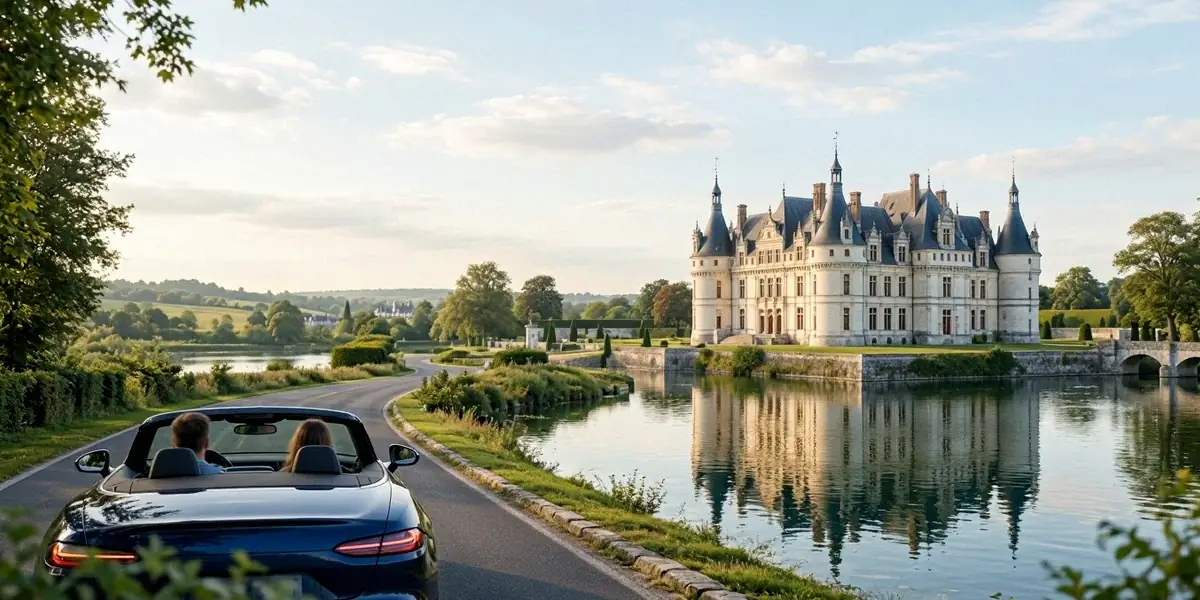
A Self-Drive Route Through Normandy’s Royal Châteaux
There’s a particular pleasure in packing the car, rolling onto a ferry or Eurotunnel shuttle at dawn, and watching the white cliffs shrink in the rear-view mirror. Ahead lies Normandy: apple orchards, half-timbered towns, and a stretch of coastline that once welcomed kings. For anyone curious about France’s last royal family, the House of Orléans, this corner of northern France is unexpectedly rich. Louis-Philippe, the so-called “Citizen King,” loved this region deeply, and his favourite summer retreat at the Château d’Eu still stands as the emotional anchor of any royal history road trip. We’ve mapped out a route that takes in four royal stops, all reachable within a few hours of the Channel ports, and all tied to the story of France’s final monarchy.
Why Normandy Is Perfect for a Royal History Road Trip
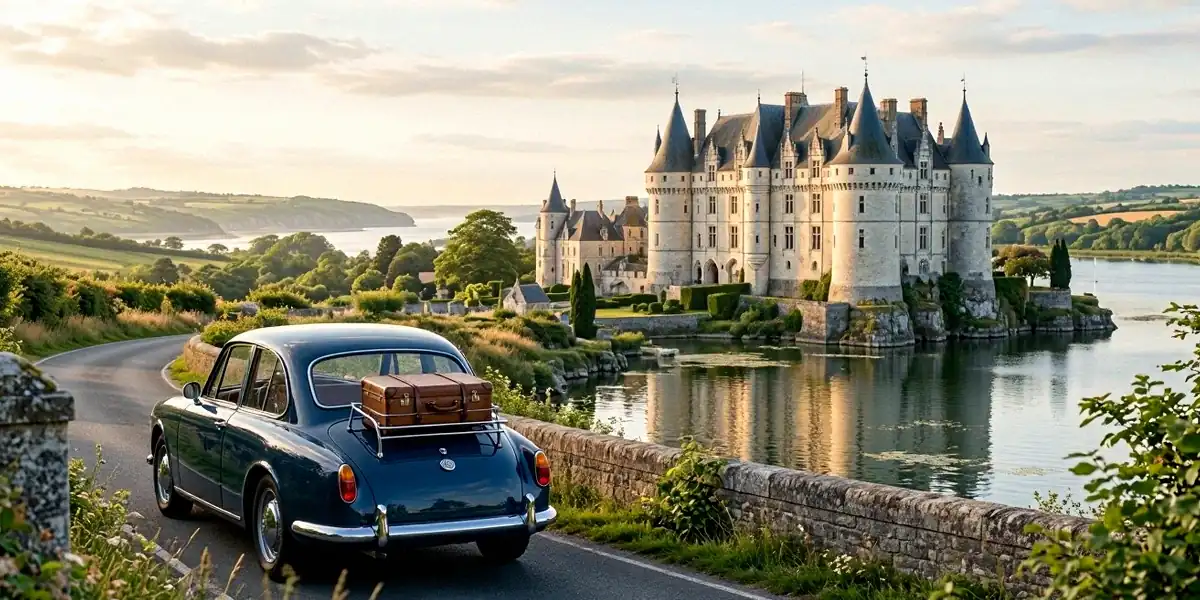
Normandy suits UK drivers almost too well. The distance from Calais or Dieppe to the heart of the region is short, the autoroute network is fast and well-signposted, and the châteaux are clustered closely enough that you can visit two or three in a single day without feeling rushed. Compare that to the Loire Valley, where the driving distances between major sites can eat into your holiday, and Normandy starts to look like the smarter choice.
The region also has a royal pedigree that surprises many visitors. Rouen was the capital of the Norman dukes, and later a Plantagenet stronghold. But for our purposes, the real draw is the Orléans connection: Louis-Philippe’s family treated Normandy as their personal playground, and the Château d’Eu in particular became the spiritual home of the July Monarchy. If you want to understand the man and his reign, you have to see Eu.
Crossing the Channel: Ferry vs Eurotunnel for UK Drivers
Both Eurotunnel Le Shuttle and Brittany Ferries are popular choices for UK travellers driving to Normandy, and each has its own appeal. Eurotunnel runs from Folkestone to Calais in about 35 minutes, and you stay in your car throughout, which makes it the fastest option if you’re coming from London or the South East. Brittany Ferries, by contrast, sails from Portsmouth, Poole, and Plymouth to Caen, Cherbourg, and Le Havre, which puts you much closer to the châteaux on this route. If you’re based in the West Country or simply prefer a slower, more scenic crossing, the ferry saves you a long drive from Calais.
When to Go: Avoiding Crowds and Making the Most of Your Trip
Late spring and early autumn are ideal. May and June bring long evenings and manageable crowds, while September offers warm light and the grape harvest in nearby vineyards. July and August are busiest, particularly around Rouen and the coast, so book accommodation early if you’re travelling in peak season. Winter can be atmospheric, especially in Rouen’s old town, but some smaller châteaux reduce their opening hours between November and March. Always check individual sites before you travel.
Stop 1: Château d’Eu – The Summer Home of Louis-Philippe
The Château d’Eu is the reason we built this route. Louis-Philippe spent his summers here with his queen, Marie-Amélie, and their large family, and the château became the unofficial court of the July Monarchy. Today it houses the Musée Louis-Philippe, the only museum in France dedicated to the July Monarchy, and walking through its galleries feels like stepping into a private family album rather than a grand state palace.
The House of Orléans and Their Beloved Eu
Louis-Philippe’s connection to Eu ran deep. He had spent part of his exile there during the Revolution, and when he became king in 1830, he transformed the château into a comfortable summer residence. The Orléans family gathered here for weddings, christenings, and quiet months away from Paris. Queen Victoria even visited in 1843, a diplomatic coup that underlined Eu’s importance. After Louis-Philippe abdicated in 1848, the family’s ties to the château endured, and today it remains a pilgrimage site for anyone tracing the Orléans story.
What to See Inside the Musée Louis-Philippe
Allow at least two hours for the museum. Highlights include the royal apartments, the Gothic-style gallery, and an extensive collection of portraits, furniture, and personal objects belonging to the Orléans family. The Salle des Guise and the library are particularly striking. Don’t miss the room dedicated to the 1843 visit of Queen Victoria, which captures the diplomatic warmth between Britain and France during Louis-Philippe’s reign.
Practical Tips for Visiting Château d’Eu
- Book your tickets online in advance, especially in summer, as guided tours can sell out.
- The château is in the town of Eu, roughly 30 minutes’ drive from Dieppe and around two hours from Calais.
- Parking is available near the château, but the town centre gets busy on market days.
- Combine your visit with a wander through Eu’s collegiate church, which has its own royal connections.
Stop 2: Château de Bizy – A Hidden Orléans Gem Near Vernon
From Eu, head south-east towards Vernon, where the Château de Bizy sits quietly on the edge of town. Château de Bizy near Vernon was a favourite residence of King Louis-Philippe and his family, and it retains an intimate, lived-in quality that larger palaces often lack. It’s an easy half-day stop between Eu and Rouen, and the formal gardens alone justify the detour.
The Orléans Connection at Bizy
Bizy passed into Orléans hands in the nineteenth century and became a summer retreat for the family. Louis-Philippe’s children and grandchildren spent time here, and the atmosphere of a working royal household still lingers in the apartments. The château’s history stretches back further, though, with earlier owners including the powerful Belle-Isle family, which gives the site a layered feel that rewards a slow visit.
Gardens and Interior Highlights
The gardens at Bizy are among the finest in Normandy, with a grand canal, formal parterres, and a network of shaded paths. Inside, look for the Empire and Restoration furniture, family portraits, and the chapel. The guided tour is worth taking, as it brings the Orléans years to life with anecdotes about the family’s daily routines.
Stop 3: Rouen and the Royal Abbey of Saint-Ouen
Rouen is the largest city on this route and the one with the deepest royal history. It was here that Joan of Arc was tried and executed, and it was here that the Plantagenet and Norman dukes held court. For our purposes, the key site is the Abbey of Saint-Ouen, whose church contains a tomb of direct relevance to the Orléans story.
The Abbey Church of Saint-Ouen: A Royal Necropolis
The Abbey of Saint-Ouen in Rouen contains the tomb of Louis-Philippe’s mother, Marie-Adélaïde de Bourbon. This alone makes it an essential stop for anyone following the Orléans trail. The abbey church itself is a masterpiece of Rayonnant Gothic, with soaring windows and a sense of scale that rivals many cathedrals. The surrounding buildings now house Rouen’s town hall, but the church remains consecrated and open to visitors.
Rouen’s Old Town and Joan of Arc Sites
After the abbey, walk into the old town. The Place du Vieux-Marché marks the site of Joan of Arc’s execution, and the modern church of Sainte-Jeanne-d’Arc stands nearby. The Gros-Horloge, a fourteenth-century astronomical clock, is another highlight, as is the cathedral that Monet painted so obsessively. For lunch, try one of the brasseries around the Place du Vieux-Marché; the local speciality is duck à la rouennaise.
Parking in Rouen can be tricky. We recommend using one of the underground car parks near the train station or the Palais de Justice, then exploring on foot. Remember that Rouen is covered by a low-emission zone, so a Crit’Air sticker is required.
Stop 4: Château de Gaillon and the Road to Paris
From Rouen, head east towards Gaillon, where a Renaissance palace rises above the Seine valley. Château de Gaillon was built by Cardinal Georges d’Amboise in the early sixteenth century and later passed through royal hands. It’s a fitting final stop before you either loop back to Calais or push on to Paris.
The Rise and Fall of Gaillon
Gaillon was one of the first Renaissance châteaux in France, importing Italian ideas north of the Alps. It flourished under the Cardinal and later became a royal residence, but the Revolution and subsequent neglect took a heavy toll. Today it is a partial ruin, but the surviving gatehouse, chapel, and terraces give a vivid sense of its former grandeur. The site is gradually being restored, and guided tours explain its remarkable history.
Extending Your Route: Paris and Versailles
If you have extra days, Gaillon is well placed for a push into Paris. From here, the A13 takes you towards the capital in around an hour and a half. Versailles, the ultimate royal day trip, is easily reachable, and the Orléans family’s Parisian home at the Palais-Royal is worth a visit. Just be aware that central Paris driving is best avoided; park at a suburban station and take the RER.
Practical Driving Tips for UK Visitors
Driving in France is straightforward for UK motorists, but a few details can trip you up. Here’s what we tell friends before they set off.
Documents, Insurance, and Crit’Air
UK drivers need a Crit’Air sticker for many French cities, including Rouen, which can be ordered online before travel. The sticker costs a few euros and must be affixed to your windscreen. You’ll also need your driving licence, vehicle registration document, insurance certificate, and a valid MOT. Carry a warning triangle, reflective vest, and breathalyser kit, even if the latter is no longer strictly enforced.
Tolls, Fuel, and Motorway Stops
French autoroutes are tolled, and you can pay by card or cash at the péage. Fuel is widely available, though motorway services are pricier than supermarket stations. We recommend filling up in towns before joining the autoroute. Most service areas are clean and well-stocked, with good coffee and fresh sandwiches.
Where to Stay Along the Route
- Eu: small hotels and chambres d’hôtes near the château.
- Vernon: convenient for Bizy, with easy access to Giverny.
- Rouen: a wide range of hotels, from budget chains to historic townhouses.
- Gaillon: limited options, so consider staying in Rouen or pushing on to Paris.
Book Château d’Eu tickets in advance, especially if you’re travelling in peak season, and consider reserving accommodation in Rouen well ahead of your trip.
Frequently Asked Questions
Do I need a Crit’Air sticker for Normandy?
Yes, if you plan to drive into Rouen or other low-emission zones. The sticker can be ordered online from the official French government site before you travel, and it’s a legal requirement in many cities.
How long does the drive from Calais to Château d’Eu take?
Roughly two hours via the A16. It’s an easy drive, and you can break the journey at Boulogne-sur-Mer or Le Touquet if you want to stretch your legs.
Is the Musée Louis-Philippe suitable for children?
Yes, though the appeal is stronger for older children and teenagers with an interest in history. The family stories and royal apartments tend to engage young visitors more than the formal portraits.
Can I visit these châteaux without a car?
It’s possible but much harder. Eu and Bizy are not well served by public transport, and the flexibility of a car makes the route far more enjoyable. If you’re reliant on trains, base yourself in Rouen and take day trips where possible.
What’s the best time of year for this route?
Late spring and early autumn offer the best combination of weather, opening hours, and manageable crowds. Summer is busiest, especially around Rouen and the coast, so book ahead.
Normandy rewards the slow traveller. The back roads between these châteaux are lined with apple trees, stone farmhouses, and the occasional roadside calvados stand. Take your time. See Louis-Philippe’s world not as a dusty footnote in a history book, but as a living story you can drive through, one royal summer residence at a time.