
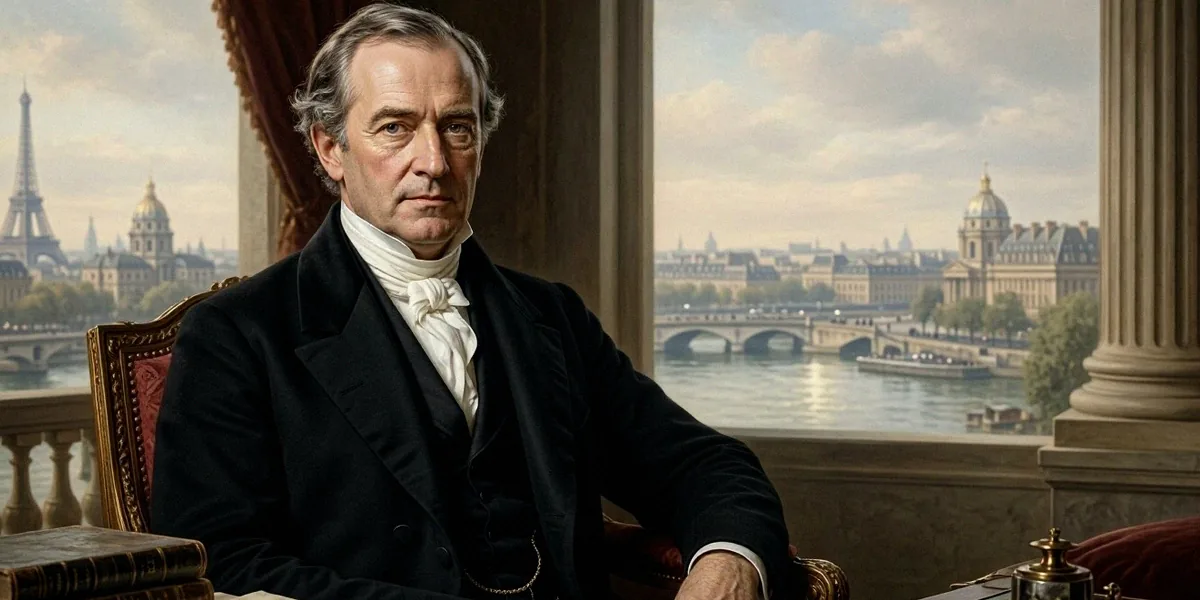
Who Was Louis-Philippe? The Last King of the French in Brief
On 24 February 1848, an elderly king in a plain black coat climbed into a hired cab in the middle of Paris and slipped away from his own throne. Louis-Philippe, the last King of the French, had just abdicated after eighteen years of rule, and within days he would be on a boat to England, arriving as a fugitive who called himself “Mr Smith”. It is one of the strangest exits in European royal history — a monarch who had once been hailed as the citizen-king, overthrown by the very Parisians who had crowned him in 1830. For us, this is where his story becomes especially interesting, because it is also the story of a French king who spent his final years in Surrey, and whose beloved Normandy residence, the Château d’Eu, still draws curious visitors from across the Channel.
Louis-Philippe’s Early Life and Orléans Roots
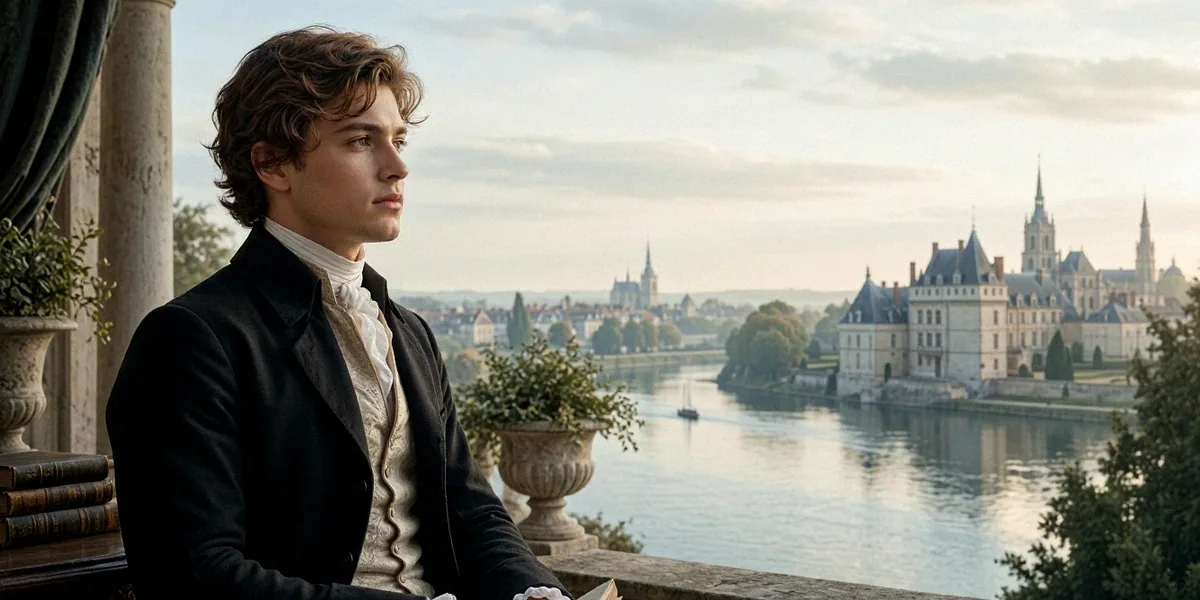
Louis-Philippe was born in Paris on 6 October 1773, into the House of Orléans, a cadet branch of the Bourbon dynasty descended from Louis XIV’s younger brother. His father was Louis Philippe II, Duke of Orléans, the man history remembers as Philippe Égalité — a title he adopted during the Revolution to signal his break with aristocratic privilege. That break went further than most: as a deputy to the National Convention, Philippe Égalité voted for the execution of his own cousin, Louis XVI, in January 1793.
A Prince in Revolutionary France
The young Louis-Philippe grew up in a household saturated with Enlightenment ideas and political ambition. He served in the French army, fought in the early revolutionary campaigns of 1792, and was present at battles such as Valmy and Jemappes. But as the Revolution radicalised, his Bourbon blood became a liability rather than an asset. In 1793, as the Terror tightened its grip, he fled France. His father was less fortunate: Philippe Égalité was arrested and guillotined in November 1793, a fate that permanently shaped how his son viewed revolutionary politics.
Exile and Education in Switzerland and England
Louis-Philippe’s exile was long and genuinely itinerant. He taught mathematics at a school in Reichenau, Switzerland, under a false name, then travelled through Scandinavia and spent time in the United States, where he visited Washington and observed the young republic at close quarters. He eventually settled in England, living at Twickenham and elsewhere, where he moved in Whig circles and studied the British constitutional system closely. That English experience mattered enormously — when he later became king, he would try to govern as a constitutional monarch on something like the British model. In 1809 he married Princess Maria Amalia of Naples and Sicily, a union that produced ten children and strengthened his dynastic position.
From Duke to King: The July Revolution of 1830
Louis-Philippe might have remained a footnote had the Bourbon Restoration not collapsed in 1830. After Napoleon’s defeat, Louis XVIII and then Charles X had ruled as kings of a restored monarchy, but Charles proved stubbornly reactionary, and Paris finally turned on him in the “Three Glorious Days” of July 1830.
The Fall of Charles X
Charles X’s appointment of the ultra-royalist Jules de Polignac as prime minister and his restrictive July Ordinances — which curtailed press freedom and altered the electoral system — triggered three days of barricades and street fighting in Paris. Charles abdicated and fled to Britain. The Chamber of Deputies, unwilling to declare a republic, looked for a candidate acceptable to both the revolutionaries and the propertied classes. Louis-Philippe, then Duke of Orléans, was the obvious compromise: a Bourbon by blood, but a man with revolutionary credentials and known liberal sympathies.
A Bourgeois Monarch on the Throne
On 9 August 1830, Louis-Philippe was sworn in as “King of the French” — a deliberately new title that linked the crown to the people rather than to the territory or the divine right of kings. He replaced the fleur-de-lis with the tricolour, dressed in bourgeois clothing rather than ceremonial robes, and sent his sons to ordinary schools. The regime became known as the July Monarchy, and its guiding principle was summed up by the politician Adolphe Thiers: “the king reigns but does not govern”. In practice, Louis-Philippe governed a great deal, and the narrow franchise — around 250,000 voters out of a population of some 33 million — meant that the “bourgeois monarchy” satisfied only a small slice of the nation.
The Reign of Louis-Philippe: Reforms and Controversies
Louis-Philippe’s eighteen-year reign (1830–1848) was a period of genuine transformation. France industrialised rapidly, the railway network expanded from almost nothing to thousands of kilometres of track, and Paris began to change under the prefect Rambuteau in ways that would later be completed by Haussmann. But the same years brought repeated unrest, assassination attempts, and a growing sense that the regime served only the wealthy.
Modernisation and the Railway Boom
The July Monarchy oversaw the foundation of the modern French railway system, with lines radiating from Paris to Orléans, Rouen, and beyond. Mining, metallurgy, and banking expanded; the Rothschilds and other financiers became central figures in French public life. Louis-Philippe also supported the return of Napoleon’s remains from Saint Helena in 1840 and the completion of the Arc de Triomphe and the column at the Place de la Bastille — gestures designed to reconcile the nation with its revolutionary and imperial past. His own family benefited too: his sons fought in Algeria, and the conquest of Algeria began in earnest under his rule.
Opposition, Corruption, and the 1848 Revolution
Yet the regime was never secure. Legitimists on the right rejected him as a usurper, while republicans on the left dismissed him as a king in disguise. The 1834 Paris uprising, triggered by a law banning political associations, was brutally suppressed in the Rue Transnonain, an event immortalised in a lithograph by Honoré Daumier. Corruption scandals, a series of assassination attempts — including one in 1835 by Giuseppe Fieschi that killed eighteen people — and a severe economic crisis in 1846–47 steadily eroded support. When the government of François Guizot refused to widen the franchise, the campaign for reform turned into revolution in February 1848.
- 1830: Louis-Philippe becomes King of the French after the July Revolution.
- 1834: The Rue Transnonain massacre exposes the regime’s willingness to use force.
- 1840: Napoleon’s remains return to Paris; Algeria is conquered.
- 1846–47: Economic crisis and the refusal to extend the vote destabilise the monarchy.
- 1848: Abdication, flight, and exile in England.
Abdication and Exile in England: The Château d’Eu Connection
By 1848, Louis-Philippe was 74 years old and politically exhausted. The February revolution swept away his regime in a matter of days, and on 24 February he abdicated in favour of his grandson, the Count of Paris. When the Chamber of Deputies refused to recognise the boy, the king disguised himself, left the Tuileries, and crossed to England. He arrived under the name “Mr Smith” — a detail that has delighted historians and novelists ever since.
The 1848 Abdication and Escape
The escape was undignified and hurried. Louis-Philippe and Queen Marie-Amélie travelled via Honfleur and Le Havre, then crossed the Channel to Newhaven. They were received in England with a mixture of sympathy and caution; Queen Victoria, who had hosted Louis-Philippe at Windsor in 1844 during the first state visit by a French monarch to a British sovereign, granted him permission to reside at Claremont House in Surrey. The house, near Esher, had once been intended for Princess Charlotte and was leased to the exiled royal family. Louis-Philippe lived there quietly, largely out of public view, until his death on 26 August 1850.
Life at Claremont and the Legacy of Château d’Eu
Before his exile, Louis-Philippe’s favourite residence was the Château d’Eu in Normandy, a former royal seat rebuilt in the seventeenth century and remodelled for the Orléans family in the nineteenth. He held his daughter’s wedding there, received Queen Victoria there in 1843, and made it a summer home for the family. Today the Château d’Eu houses the Musée Louis-Philippe, and for UK visitors exploring Normandy castles, it offers a rare chance to see the domestic world of a French king who ended his days as an English resident. The contrast between the château’s formal gardens and the modest rooms at Claremont is one of the most striking in nineteenth-century royal history.
Louis-Philippe’s Legacy and the House of Orléans Today
Louis-Philippe’s reputation has fluctuated wildly. To his critics he was a cautious, sometimes cynical politician who promised reform and delivered stagnation. To his defenders he was a modernising king who gave France eighteen years of peace, industrial growth, and relative press freedom at a time when much of Europe was still autocratic. Either way, his reign marks the point at which the French monarchy tried — and ultimately failed — to reconcile itself with the revolutionary tradition.
The Orléanist Claim to the Throne
The House of Orléans, Louis-Philippe’s branch of the Bourbon dynasty, still has descendants today. His grandson Philippe, Count of Paris, and later Henri, Count of Paris, maintained the Orléanist claim to the French throne through the twentieth century, and the current claimant, Jean, Count of Paris, is a direct descendant. The Orléanist movement remains a small but persistent presence in French royalist circles, and the family’s archives, papers, and properties remain an important source for historians of nineteenth-century France.
Why Louis-Philippe Matters for French History
For British readers, Louis-Philippe is a particularly rewarding figure because his life intersects so directly with our own history. He lived in England twice, married into a European network that included Queen Victoria’s family, and died in Surrey. His château at Eu is a short drive from the Normandy coast ports that many UK travellers use, and it remains one of the most accessible sites for anyone wanting to understand the Orléans branch of the French royal family. His story also explains why France has no king today: the July Monarchy’s failure discredited constitutional monarchy as a workable model for the country.
Frequently Asked Questions
Who was Louis-Philippe?
Louis-Philippe was the last King of the French, ruling from 1830 to 1848. Born in 1773 as a prince of the House of Orléans, he was the son of Philippe Égalité, who voted for the execution of Louis XVI. He came to the throne after the July Revolution of 1830 and was overthrown in the revolution of 1848.
Why did Louis-Philippe flee to England?
After abdicating on 24 February 1848, he escaped Paris and crossed the Channel, arriving in England under the name “Mr Smith”. Queen Victoria allowed him to live at Claremont House in Surrey, where he died in 1850. His exile followed the collapse of the July Monarchy and the establishment of the Second Republic.
What is the Château d’Eu and why does it matter?
The Château d’Eu in Normandy was Louis-Philippe’s favourite residence. He remodelled it, hosted Queen Victoria there in 1843, and used it as a summer home. Today it houses the Musée Louis-Philippe and is a key site for UK visitors interested in French royal history and Normandy castles.
Does the House of Orléans still exist?
Yes. The House of Orléans, the branch of the Bourbon dynasty to which Louis-Philippe belonged, still has descendants today. The current Orléanist claimant is Jean, Count of Paris, and the family remains a small but recognised presence in French royalist circles.
Why is Louis-Philippe important for French history?
His reign bridged revolutionary ideals and royal tradition, introduced significant industrial and railway development, and ultimately demonstrated that constitutional monarchy could not survive in nineteenth-century France. His abdication in 1848 ended the last serious attempt to place a king at the head of a French constitutional state.
Louis-Philippe’s reign bridged revolutionary ideals and royal tradition, leaving a complex legacy that continues to intrigue anyone exploring French history and Normandy châteaux. From the barricades of 1830 to the quiet rooms of Claremont House, his life traces the final chapter of the French monarchy — and for UK readers, it is a story that begins and ends on our own shores.