
The Château d’Eu: From the Guise Family to the House of Orléans
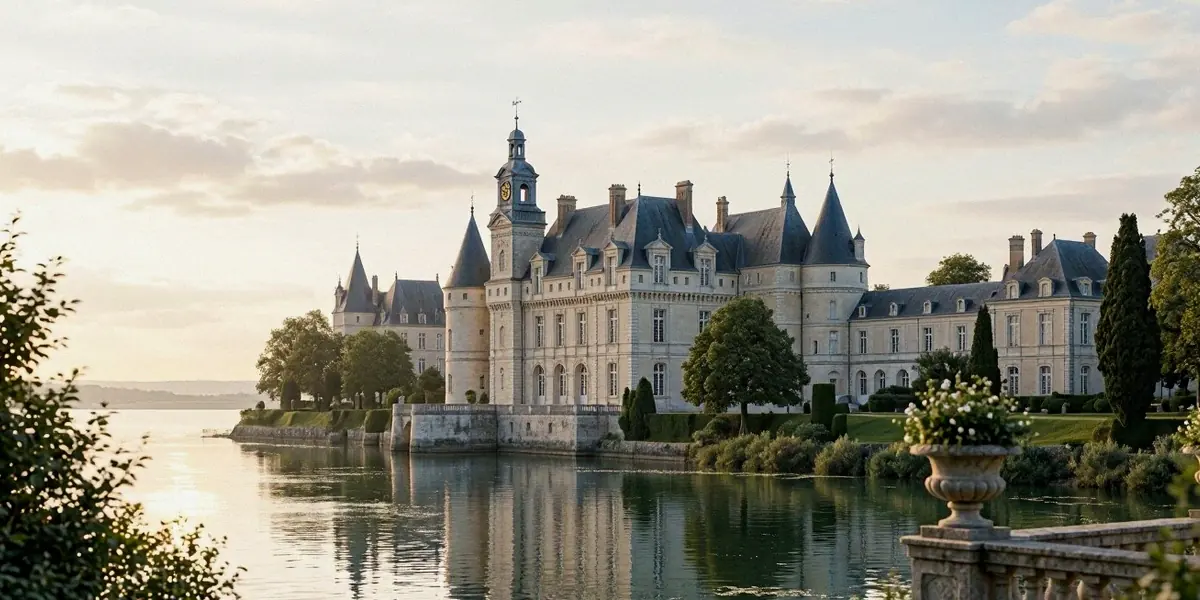
Stand on the edge of the town of Eu in Normandy and you will see it rise suddenly above the slate rooftops: a pale, elegant façade of turrets, gables and long windows, more Loire Valley fairy tale than grim medieval fortress. Yet the Château d’Eu has seen sieges, royal weddings, political intrigue and the comings and goings of two of France’s most fascinating dynasties. For UK travellers who already know Versailles and the Loire, this lesser-known château offers something rarer — an intimate, almost domestic encounter with French royal history, just a short hop from the Channel ferry ports.
A Norman Castle with Royal Ambitions
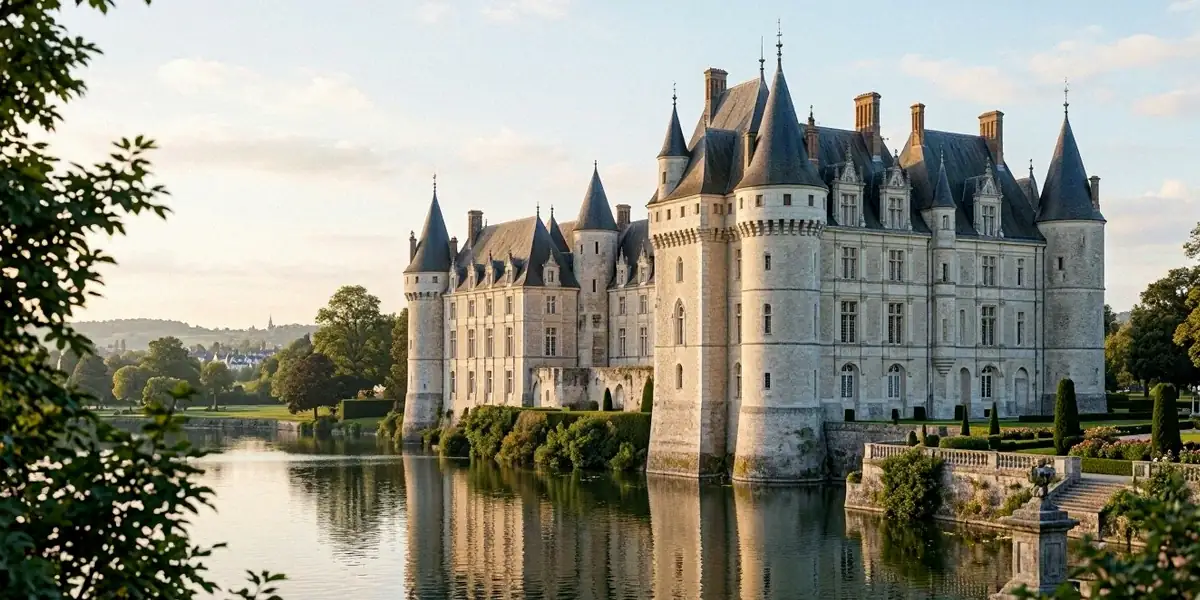
The Château d’Eu sits in the heart of the town of Eu, in the Seine-Maritime department of Normandy, only a few kilometres from the coast and the English Channel. That location was never an accident. For centuries, whoever controlled Eu controlled one of the shortest crossing points between Normandy and England, making the town and its castle a strategic prize long before it became a princely residence.
Medieval Beginnings and the Counts of Eu
The site began life as a medieval fortress, raised to guard the valley of the Bresle river and the approach to the sea. Around it grew the town of Eu, and from the eleventh century the castle became the seat of the Counts of Eu, a noble title tied closely to the dukes of Normandy and, after 1066, to the tangled history of England and France. The Counts of Eu were vassals and sometimes rivals of the Norman dukes, and their stronghold witnessed the shifting allegiances that shaped the medieval Channel world.
Why the Channel Coast Made Eu a Prize
Look at a map and the logic is obvious. Eu lies close to Le Tréport and the mouth of the Bresle, within easy reach of Dieppe, Rouen and the ports of southern England. In an age when armies and traders moved by sea, this made the town a natural gateway between the two kingdoms.
- It guarded the shortest sea routes between Normandy and southern England.
- It sat on the border between Normandy and Picardy, a sensitive frontier zone.
- Its port at Le Tréport gave the castle direct access to Channel trade and naval movement.
That strategic value explains why Eu passed through so many hands — and why, in the sixteenth century, it attracted one of the most powerful families in France.
The Guise Family: Power, Faith, and Grandeur
By the mid-sixteenth century, the Château d’Eu had come into the possession of the House of Guise, a cadet branch of the House of Lorraine and the most formidable Catholic noble family in France. Under the Guises, the old fortress was transformed into a princely residence — a stage for ambition, celebration and religious politics.
The Rise of the Guise Dynasty
The Guises were soldiers, statesmen and, at times, kingmakers. Henri I, Duke of Guise, owned the château in the sixteenth century and used it as a base for his family’s growing power. The Guise star burned brightest during the French Wars of Religion, when they positioned themselves as champions of the Catholic cause against the Huguenots. Their influence reached into the royal court, the army and the Church, and their residences — Eu among them — became instruments of that influence.
Architectural Transformations Under the Guises
The Guises did not simply occupy Eu; they remade it. They commissioned grand celebrations and refurbishments that turned the medieval stronghold into something closer to a Renaissance palace, with formal gardens, elegant reception rooms and a façade designed to impress visiting nobles and diplomats. The château became a place where politics was conducted in the language of architecture and hospitality.
The Guise Legacy and the French Wars of Religion
The family’s fortunes rose and fell with the religious conflicts that tore France apart in the late sixteenth century. Henri I, Duke of Guise, was assassinated in 1588, and the dynasty’s dominance was eventually eclipsed by the Bourbon kings. Even so, the Guises left an enduring mark on Eu: the château’s transformation into a princely residence, and its reputation as a place of political significance, outlived them. When the site later passed to new owners, it carried the memory of Guise grandeur with it.
Louis-Philippe and the House of Orléans Take the Stage
If the Guises gave Eu its princely ambition, the House of Orléans gave it a heart. The château’s most famous chapter belongs to Louis-Philippe, Duke of Orléans and later King of the French from 1830 to 1848. He spent childhood summers at the Château d’Eu and, as an adult, made it his preferred family residence — a place of domestic warmth rather than cold ceremonial display.
Louis-Philippe’s Vision for Eu
When Louis-Philippe set about restoring the château, he was not trying to rival Versailles. His vision was more personal: a comfortable, dignified home for a large family, decorated in the taste of the July Monarchy and filled with the everyday life of the Orléans clan. He refashioned the interiors, commissioned furniture and portraits, and turned the château into a working residence where politics and family life overlapped.
The Orléans Family at Home in Normandy
At Eu, the Orléans family lived something closer to ordinary aristocratic life than palace protocol usually allowed. Children played in the grounds, guests arrived for long stays, and the château became a favourite retreat from the pressures of Paris. For Louis-Philippe, Eu was not just a symbol of his reign — it was the place he returned to for rest, reflection and time with those closest to him.
Royal Visitors and the English Connection
The château’s most celebrated moment came in 1843, when Queen Victoria visited the Château d’Eu. The visit marked a significant moment in Anglo-French royal relations, a gesture of friendship between two nations with a long and often difficult shared history. Victoria was received by Louis-Philippe and his family, and the occasion cemented Eu’s place in the diplomatic story of nineteenth-century Europe. It was a reminder that this quiet corner of Normandy had become a stage for international politics.
A Royal Residence in Exile and Memory
The revolution of 1848 ended Louis-Philippe’s reign. He abdicated and went into exile, and the Orléans family’s connection to Eu entered a new, more bittersweet phase. The château that had been a family home became a symbol of a lost monarchy.
The Orléans in Exile and the End of an Era
After the abdication, the Orléans family lived largely abroad, and the Château d’Eu lost its role as a royal residence. Over the following decades, the building passed through different hands and uses, surviving the political upheavals of the nineteenth and twentieth centuries. Its rooms, once filled with royal guests, fell quiet.
From Private Home to Public Museum
Today the Château d’Eu is a public heritage site. It houses the Musée Louis-Philippe, which displays artefacts from the Orléans family and the July Monarchy — furniture, paintings, personal objects and documents that bring the nineteenth-century royal household to life. For visitors, this is the château’s great charm: instead of vast, impersonal state rooms, you find rooms that feel lived in, telling the story of a family as much as a monarchy.
Why the Château d’Eu Belongs on Your Normandy Itinerary
We think the Château d’Eu deserves a place on any Normandy castles tour, especially for UK visitors who want something beyond the obvious. It is close to the Channel ferry ports, rich in French royal history, and refreshingly different from the crowds and scale of Versailles.
Practical Tips for UK Travellers
- Eu is easily reachable from Newhaven or Portsmouth ferry crossings, making it a natural first or last stop on a Normandy trip.
- Allow at least half a day for the château, the Musée Louis-Philippe and a wander through the town of Eu.
- Combine your visit with the nearby coast at Le Tréport and Mers-les-Bains for a full day out.
- Check opening times before you travel, as heritage sites in Normandy often vary by season.
Pairing Eu with Other Normandy Castles
Eu works beautifully as part of a wider Normandy itinerary. Pair it with the romantic ruins of Château Gaillard, the medieval streets of Rouen, or the coastal fortresses of Dieppe. Each tells a different part of the Norman story, and together they give UK visitors a rounded picture of the region’s royal and military past.
FAQ
Where is the Château d’Eu located?
The Château d’Eu is in the town of Eu, in Normandy, northern France, close to the Channel coast and easily reachable from Newhaven or Portsmouth ferry crossings.
Why is the Château d’Eu important in French royal history?
It was a princely residence of the Guise family in the sixteenth century and later the favourite home of Louis-Philippe, King of the French from 1830 to 1848, making it a rare link between two great chapters of French royal history.
Did Queen Victoria visit the Château d’Eu?
Yes. Queen Victoria visited the Château d’Eu in 1843, a significant moment in Anglo-French royal relations and one of the château’s most celebrated events.
What can visitors see at the Château d’Eu today?
The château now houses the Musée Louis-Philippe, displaying artefacts from the Orléans family and the July Monarchy, including furniture, paintings and personal objects.
Is the Château d’Eu worth visiting from the UK?
Absolutely. Its proximity to the ferry ports, its intimate royal history and its contrast with better-known sites like Versailles make it an ideal addition to a Normandy castles tour.
The Château d’Eu offers UK visitors a uniquely intimate encounter with French royal history, bridging the Guise and Orléans eras in one unforgettable Normandy setting. Whether you arrive by ferry from Newhaven or Portsmouth, or weave it into a longer tour of Normandy castles, you will find a château that feels less like a monument and more like a home — and that is precisely what makes it so memorable.