
Queen Victoria’s Visits to Eu: A Royal Friendship Across the Channel
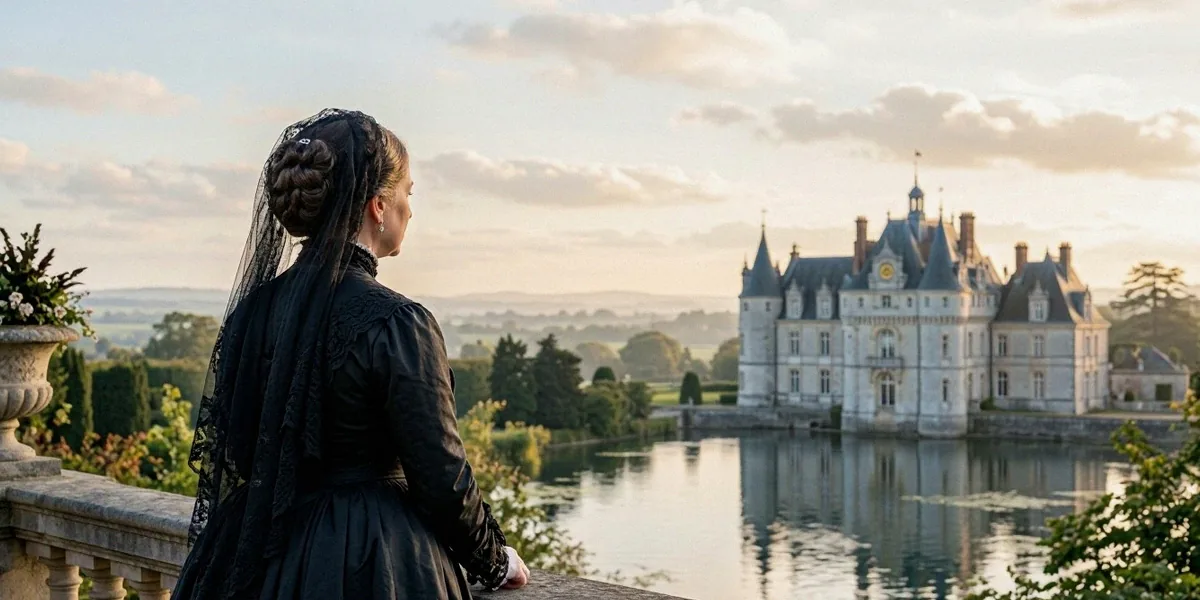
When Queen Victoria stepped ashore at Tréport in September 1843 and travelled the short distance to the Château d’Eu, she did something no British monarch had done since 1520: meet a French king on French soil. The last occasion had been the Field of the Cloth of Gold, when Henry VIII and Francis I staged their glittering encounter near Calais. Now, more than three centuries later, Victoria arrived as the guest of Louis-Philippe, King of the French, and the warmth between the two sovereigns surprised everyone. Over the following three summers, she and Prince Albert would return twice more, turning a modest Normandy town into the stage for one of the nineteenth century’s most unlikely royal friendships.
The Château d’Eu and the House of Orléans
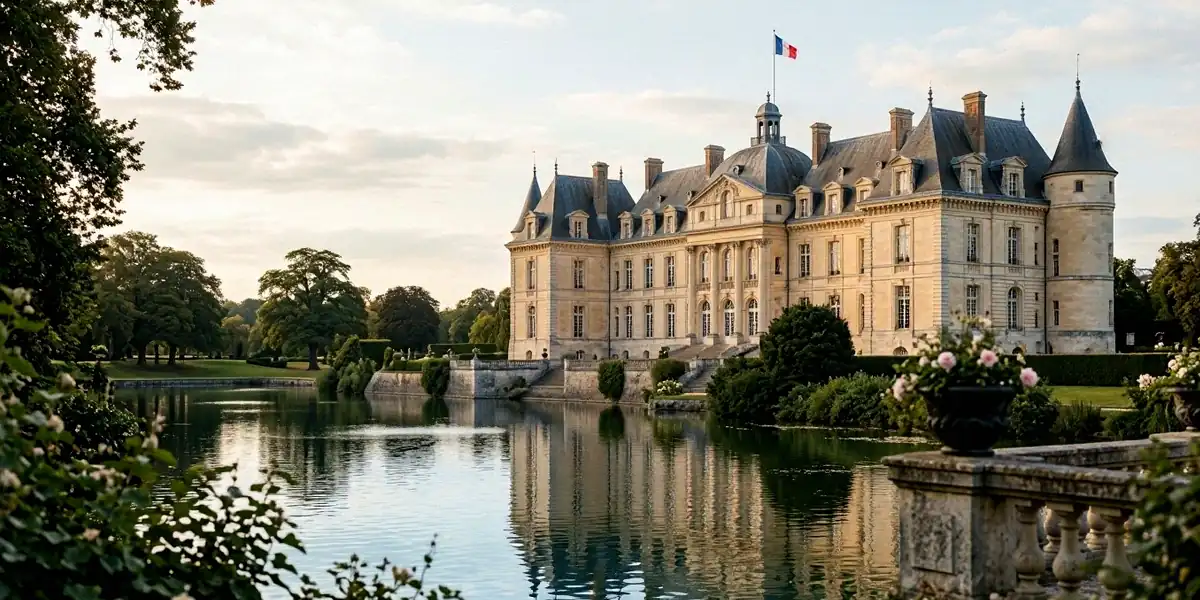
The Château d’Eu sits in the small Normandy town of Eu, close to the Channel coast between Dieppe and Le Tréport. Long before the Orléans family took an interest in it, the site had been a royal residence — a medieval castle, later a grand ducal palace, tied to the counts of Eu and eventually to the French crown. By the early nineteenth century, however, it had fallen into neglect. That changed when Louis-Philippe, head of the House of Orléans, chose it as a summer base from which to present his family and his monarchy to the world.
Louis-Philippe’s Restoration of the Château
Louis-Philippe restored the Château d’Eu in Normandy as a summer residence for the House of Orléans, embarking on a programme of rebuilding and refurnishing that gave the old palace a comfortable, domestic character suited to family life. Rather than imitate Versailles, he and Queen Marie-Amélie created something closer to an English country house: bright salons, practical apartments, and gardens laid out for walks and children’s games. The result was a residence that felt personal rather than ceremonial — precisely the atmosphere that would later make Victoria feel so at ease there.
Eu as a Symbol of Orléanist Ambition
For Louis-Philippe, Eu was never only a holiday home. As the July Monarchy settled into its second decade, the king needed to prove that his regime was stable, respectable and internationally accepted. Hosting the British queen at his own Normandy estate did exactly that. It signalled that the House of Orléans could receive foreign royalty on equal terms, that France under a constitutional monarchy was a reliable partner, and that the king’s large family — the princes and princesses of Orléans — embodied the bourgeois domestic virtues his regime claimed to represent.
The 1843 Visit: Victoria and Albert at Eu
The September 1843 state visit was the diplomatic centrepiece of Louis-Philippe’s reign. Queen Victoria and Prince Albert crossed the Channel and stayed at the Château d’Eu as guests of the French king and queen. It was the first time a British monarch had met a French king on French soil since the Field of the Cloth of Gold in 1520, and both courts understood the weight of the moment.
Arrival and Ceremonial Welcome
Victoria landed at Tréport and was met with the full apparatus of French royal hospitality: troops, officials, and cheering crowds along the road to Eu. At the château, Louis-Philippe greeted her personally, and the days that followed mixed formal dinners and receptions with informal excursions. Albert, who shared the king’s interest in mechanics and design, found plenty to discuss. The visit was carefully choreographed, but the ease between host and guest was genuine rather than staged.
Private Moments and Family Connections
What struck observers most was how quickly Victoria warmed to Louis-Philippe. He was old enough to be her father, and he treated her with an affectionate, almost paternal gallantry that she clearly enjoyed. She admired the simplicity of the Orléans family life at Eu, the children running through the salons, and the unpretentious style of the court. For a young queen used to the stricter formalities of the British court, the atmosphere was refreshing — and it laid the foundation for a correspondence and friendship that would last until the king’s death.
The 1844 Return: A Second Royal Encounter
Victoria and Albert returned to Eu in 1844, cementing the Entente Cordiale that had begun the previous year. The second visit allowed the king to present his family and his Normandy estate in full splendour, and it confirmed that the friendship between the two courts was not a one-off diplomatic gesture but an ongoing relationship.
Diplomatic Aims Behind the Visit
Both sides had practical interests. Britain and France were navigating tensions over Spain, Morocco, and colonial rivalries in various parts of the world. A visible royal friendship helped keep those disputes manageable. For Louis-Philippe, the return visit underlined that his monarchy was recognised by the most powerful nation in Europe. For Victoria and Albert, it was a chance to strengthen a personal bond that made diplomacy easier.
Public Reaction in Britain and France
Newspapers on both sides of the Channel followed the visit closely. In Britain, the queen’s travels were reported with enthusiasm and a touch of curiosity about French hospitality. In France, the king’s ability to attract such distinguished guests was presented as proof of his regime’s prestige. Not everyone was impressed — republicans and legitimists grumbled about cosying up to the English — but the overall tone was approving.
The 1845 Visit and the Growing Orléans Friendship
The third visit, in September 1845, was the last before the 1848 Revolution. By now Victoria’s affection for Louis-Philippe and the Orléans family was well established, and the atmosphere at Eu was less that of a state occasion than of a family reunion.
A Family Gathering at Eu
The king’s many children and grandchildren filled the château, and Victoria delighted in the informal domesticity. She noted the happiness of the household, the kindness of Queen Marie-Amélie, and the lively company of the young Orléans princes and princesses. Albert, meanwhile, continued his conversations with the king on art, industry and politics. The visit felt, in Victoria’s own words, like staying with friends rather than attending a diplomatic function.
Warnings of Revolution
Yet the political skies were darkening. Discontent with the July Monarchy was growing, and the king’s refusal to widen the franchise was alienating much of the middle class. Victoria and Albert may not have grasped how fragile the regime had become, but some in their entourage sensed danger. Within three years, those warnings would prove justified.
After the July Monarchy: Victoria, Eu, and Exile
The 1848 Revolution ended Louis-Philippe’s reign. Faced with insurrection in Paris, the king abdicated in favour of his grandson and fled the country. The July Monarchy was over, and the Orléans family began a long exile.
Louis-Philippe’s Flight to England
The 1848 Revolution forced Louis-Philippe into exile in England, where Queen Victoria offered him refuge. He landed at Newhaven under the modest name “Mr Smith” and eventually settled at Claremont House in Surrey, lent by the British crown. Victoria visited him there, and the friendship that had begun at Eu continued in very different circumstances. The old king died at Claremont in 1850, still attended by the loyalty of the British queen.
Victoria’s Continued Loyalty to the Orléans
Victoria’s sympathy for the Orléans family did not end with the king’s death. She remained close to Queen Marie-Amélie and to several of the Orléans princes and princesses, many of whom settled in England. The Château d’Eu passed out of the family’s hands, and the Normandy summers of the 1840s became a memory of a vanished regime.
Why Eu Still Matters to British Royal History
For anyone interested in the relationship between Britain and France in the nineteenth century, Eu is not a footnote. It was the setting for the first meeting of a British monarch and a French king on French soil since 1520, and it hosted three of the warmest royal encounters of the era. Its story connects the July Monarchy, the House of Orléans, and the Entente Cordiale in a single, compact place.
The Château d’Eu Today
The Château d’Eu now houses a museum dedicated to the July Monarchy and the Orléans family. Visitors can see the rooms where Victoria and Albert stayed, furniture and objects from the royal household, and displays that bring the 1840s court back to life. It is one of the few places in France where the memory of Louis-Philippe is preserved with real care.
Normandy’s Royal Memory
Normandy holds many layers of royal history, from the dukes of Normandy to the Plantagenets, but Eu occupies a distinctive place. It is where the July Monarchy chose to present itself at its most confident and most domestic — and where a British queen formed a friendship that outlasted the regime itself.
- The Château d’Eu was Louis-Philippe’s favoured Normandy residence and a symbol of Orléanist ambition.
- Victoria’s 1843 visit was the first meeting of a British monarch and a French king on French soil since 1520.
- Return visits in 1844 and 1845 strengthened the Entente Cordiale.
- The 1848 Revolution sent Louis-Philippe into exile in England, where Victoria offered him refuge.
- Today the château houses a museum devoted to the July Monarchy and the Orléans family.
Queen Victoria’s visits to Eu were not mere ceremonial gestures. They were the product of a genuine friendship between a young British queen and an ageing French king, and they shaped Anglo-French relations at a critical moment. For our readers tracing the history of Louis-Philippe, the House of Orléans and the July Monarchy, Normandy — and the Château d’Eu in particular — remains essential territory.
FAQ
Why did Queen Victoria visit the Château d’Eu?
Victoria visited Eu to meet King Louis-Philippe as part of the growing Entente Cordiale between Britain and France. The 1843 visit was the first time a British monarch had met a French king on French soil since the Field of the Cloth of Gold in 1520, and it was followed by return visits in 1844 and 1845.
How many times did Queen Victoria stay at Eu?
She stayed at the Château d’Eu three times: in September 1843, September 1844, and September 1845. The 1845 visit was the last before the 1848 Revolution ended Louis-Philippe’s reign.
What happened to Louis-Philippe after the 1848 Revolution?
The 1848 Revolution forced Louis-Philippe into exile in England, where Queen Victoria offered him refuge. He settled at Claremont House in Surrey and died there in 1850.
Can you visit the Château d’Eu today?
Yes. The Château d’Eu now houses a museum dedicated to the July Monarchy and the Orléans family, with rooms and collections that recall the visits of Queen Victoria and the court of Louis-Philippe.
Why is Eu important to British royal history?
Eu is where a British monarch and a French king met on French soil for the first time in over three centuries, and where Victoria formed a lasting friendship with Louis-Philippe and the House of Orléans. It remains a key site for understanding Anglo-French royal relations in the nineteenth century.