
Exile in England: Louis-Philippe at Claremont
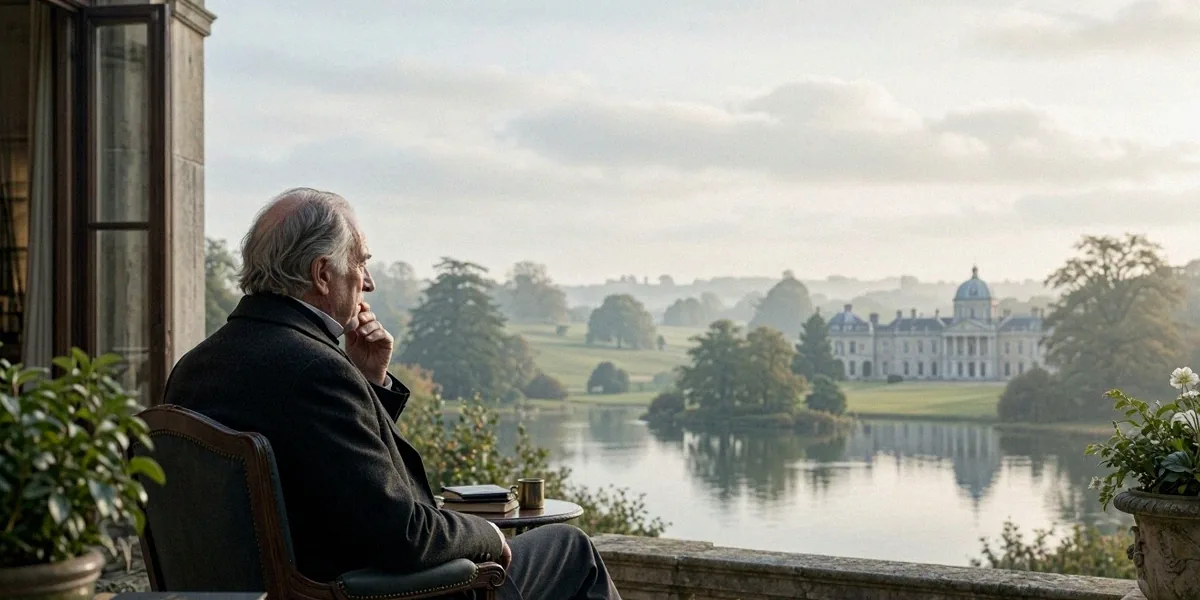
On a cold February morning in 1848, a 74-year-old king climbed into an ordinary fiacre outside the Tuileries Palace and slipped away through the back streets of Paris. Within days, Louis-Philippe — the last King of the French — would be a refugee on English soil, and within weeks he would be installed at Claremont House near Esher in Surrey, a Georgian mansion lent to his family by Queen Victoria. This is the story of how the July Monarchy ended not with a battlefield or a barricade at the palace gates, but with a quiet crossing of the Channel and a final chapter written in the English countryside. For anyone tracing the fortunes of the House of Orléans, this corner of Surrey is where the dynasty’s French story meets its British one.
The Fall of the July Monarchy and the Flight to England
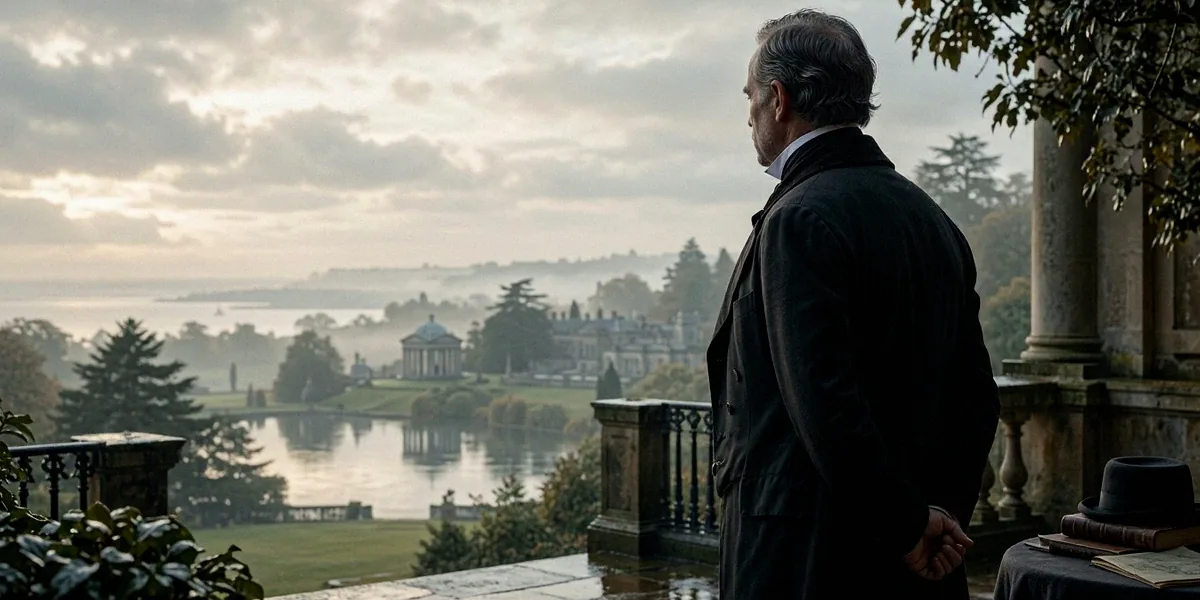
The July Monarchy had always rested on a fragile compromise. Louis-Philippe, crowned in 1830 after the July Revolution, presented himself as a “citizen king” — a Bourbon cousin who could bridge the gap between revolutionary France and its monarchical past. Eighteen years later, that balancing act collapsed in a matter of days.
The February Revolution and Abdication
The crisis began with the government’s ban on political banquets, a reformist tactic that had become a proxy for demands for wider suffrage. On 22 February 1848, crowds took to the streets of Paris. Two days later, troops fired on demonstrators outside the Foreign Ministry on the Boulevard des Capucines, killing dozens. The city rose. Barricades went up across the working-class districts, and the National Guard — the very force that had kept Louis-Philippe on his throne in 1830 — began fraternising with the insurgents.
By the afternoon of 24 February, the Tuileries was untenable. Louis-Philippe signed an act of abdication in favour of his grandson, the Comte de Paris, and then did something no French king had done before: he walked out of his own palace in disguise. Wearing a plain coat and a round hat, accompanied by his wife Queen Marie-Amélie, he crossed the Place de la Concorde in an open carriage and reached Saint-Cloud before the mob realised he had gone. The Second Republic was proclaimed that same evening. The July Monarchy, which had lasted just under eighteen years, was over.
Crossing the Channel: From Le Havre to Newhaven
The royal party travelled west under the assumed name of “Mr and Mrs Smith,” a detail that has stuck in the popular imagination ever since. They reached the Normandy coast and boarded a steamer at Le Havre, landing at Newhaven in East Sussex on 3 March 1848. The choice of England was not accidental: Louis-Philippe had spent years of exile there during the Revolution, teaching mathematics and geography to aristocratic pupils in Reichenau and Twickenham, and he knew the country well.
From Newhaven the family made its way to London and then to Claremont House near Esher, Surrey, which had been placed at their disposal. For the former king, the journey was a strange reversal — the man who had once fled revolutionary France as a young duke was now fleeing a revolution of his own making, in the opposite direction, at the age of seventy-four.
Claremont House: A Royal Residence in Surrey
Claremont House sits in landscaped grounds just south of Esher, a short drive from Hampton Court and within easy reach of London. Its story is inseparable from the tangled family networks of nineteenth-century European royalty.
The History of Claremont and Its Royal Connections
The house was built in the 1770s for Lord Clive of India, on the site of an earlier mansion. In 1816 it was acquired for Princess Charlotte of Wales, the only legitimate child of the future George IV, on her marriage to Prince Leopold of Saxe-Coburg — the future King Leopold I of the Belgians. Charlotte’s death in childbirth at Claremont in 1817 plunged the nation into mourning and left the British succession in crisis. Leopold retained the house, and it was through this connection that Claremont became a familiar royal retreat.
By the 1840s, Claremont’s reputation as a discreet, dignified residence made it the obvious choice for the exiled Orléans family. It was large enough for a substantial household, private enough to keep the family out of the newspapers, and close enough to London for occasional visitors.
Queen Victoria’s Generosity to the Orléans Family
Queen Victoria’s decision to grant Claremont to the Orléans family was a gesture of genuine respect rather than mere diplomatic courtesy. Victoria was close to Louis-Philippe, who had been the first European monarch to recognise her accession in 1837, and she shared warm relations with his children — particularly the Prince de Joinville and the Duchesse d’Orléans. The two courts had exchanged visits throughout the 1840s, and Victoria regarded the French king as a model of constitutional monarchy.
Granting Claremont allowed the family to live in a manner appropriate to their rank without imposing on the British taxpayer or forcing them into rented lodgings. It was, in effect, a private act of hospitality from one sovereign to another — and it gave Louis-Philippe a final home that was neither a prison nor a palace.
Life in Exile: The Orléans Family at Claremont
Exile at Claremont was comfortable, but it was still exile. The household settled into a rhythm that combined the routines of a country estate with the melancholy of a court in waiting.
Daily Life and Family Dynamics
Louis-Philippe rose early, read the French and English newspapers, and corresponded tirelessly with supporters and relatives across Europe. Marie-Amélie kept a strict Catholic routine, and the family gathered for meals and prayers in the house’s private chapel. The couple’s many children and grandchildren came and went, turning Claremont into a busy family home rather than a formal royal residence.
Visitors to the house in these years described a domestic atmosphere: the former king playing with his grandchildren in the grounds, the family walking in the surrounding parkland, and long evenings of conversation in French and English. The household staff were a mix of French servants who had followed the family into exile and local English employees.
Visitors and Political Activities
Claremont became a quiet hub of Orléanist politics. Loyalists from France made the journey across the Channel to pay their respects, and British aristocrats — some out of genuine sympathy, others out of curiosity — called at the house. Among the regular visitors were members of the British royal family, including Victoria herself on occasion.
Louis-Philippe did not abandon hope of a restoration. He followed French politics closely, received reports from supporters, and maintained a correspondence with figures across the Orléanist network. But he was careful never to appear to be plotting against the Republic, and the British government, mindful of its relations with Paris, kept a discreet eye on the household. The result was a political life conducted almost entirely by letter and conversation — influential, perhaps, but far removed from the halls of power.
The Death of Louis-Philippe and His Legacy in England
Louis-Philippe’s health declined steadily through the late 1840s. The damp English winters did him no favours, and the death of several close friends and relatives deepened his isolation.
The Final Days and Death at Claremont
In the summer of 1850, the former king contracted pneumonia. He died at Claremont House on 26 August 1850, aged 76, surrounded by his family. His last words, according to those present, were of his country and his children. Marie-Amélie, who had been at his side for more than forty years, was devastated.
His death was reported across Europe. In France, the Orléanist press mourned a king who had tried to reconcile monarchy with liberty; in England, obituaries noted the dignity with which he had borne his exile. Queen Victoria recorded her sorrow in her journal.
Burial and Memorials in England
Louis-Philippe was buried not in France, but in England. His funeral was held at St. Charles Borromeo Church in Weybridge, a Catholic church closely associated with the exiled French community in Surrey. The church, built in the 1830s, became the spiritual centre of the Orléans family’s life in exile, and several members of the family were buried there before their remains were later moved.
The family’s time at Claremont did not end with the king’s death. Marie-Amélie remained at the house until 1852, when the establishment of the Second Empire under Napoleon III made a return to France impossible for the Orléans family. The widow eventually moved to Spain, and later to France after the fall of the Empire. The Orléans claim to the French throne passed to Louis-Philippe’s grandson, the Comte de Paris, and the family’s descendants continued to play a role in French royalist politics well into the twentieth century.
Claremont Today: Tracing the Exile’s Footsteps
For anyone interested in the House of Orléans, the Surrey landscape around Claremont offers a surprisingly rich trail of sites. The area is easily reached from London by train, and a half-day visit can cover the main locations.
Visiting Claremont and Its Surroundings
Claremont House itself is now a private school and is not generally open to the public, but the surrounding Claremont Landscape Garden is managed by the National Trust and open year-round. The garden, laid out in the eighteenth century with contributions from Capability Brown and William Kent, includes a lake, a belvedere, and sweeping views over the Surrey countryside. Walking the grounds gives a sense of the setting in which Louis-Philippe spent his final years.
- Claremont Landscape Garden: National Trust property, open daily; the house is visible from the grounds but not accessible to visitors.
- St. Charles Borromeo Church, Weybridge: The Catholic church where Louis-Philippe’s funeral was held; still an active parish with a strong French connection.
- Weybridge town centre: A short distance from Claremont, with cafés and shops for a break during a visit.
- Esher and Hampton Court: Nearby, and easily combined with a Claremont visit for a full day out.
Other Orléans Sites in the UK
Beyond Surrey, several other English locations are linked to the Orléans family. In London, the family worshipped at the French Chapel in Little George Street and maintained connections with the French embassy. In Twickenham, Louis-Philippe had lived during his earlier exile in the 1790s, and the area retains a modest French émigré heritage. Newhaven in East Sussex, where the family landed in 1848, is today a working port with a small museum and harbour walks that recall its nineteenth-century role as a gateway for travellers between France and England.
For those tracing the family’s wider European exile, the Orléans burial sites in Dreux, France, and the chapel at Weybridge together tell the story of a dynasty divided between two countries.
FAQ
Where exactly is Claremont House?
Claremont House is near Esher in Surrey, about 15 miles south-west of central London. The house is now a private school, but the surrounding Claremont Landscape Garden is managed by the National Trust and open to the public.
Why did Louis-Philippe flee to England in 1848?
After abdicating during the February Revolution, Louis-Philippe needed a safe haven. He had lived in England during an earlier exile in the 1790s and had strong personal ties to Queen Victoria and the British royal family, who granted him Claremont House.
Where did Louis-Philippe land in England?
The royal family landed at Newhaven in East Sussex on 3 March 1848, having crossed from Le Havre in Normandy. From there they travelled to London and then to Claremont in Surrey.
Where is Louis-Philippe buried?
Louis-Philippe’s funeral was held at St. Charles Borromeo Church in Weybridge, Surrey, following his death at Claremont in 1850. His remains and those of other family members were later moved to the Orléans family burial site at Dreux in France.
Can you visit Claremont House itself?
No — Claremont House is a private school and is not open to the public. However, the Claremont Landscape Garden surrounding it is open year-round, and St. Charles Borromeo Church in Weybridge is an active parish that visitors can attend.
Louis-Philippe’s exile at Claremont marked the end of an era for the House of Orléans. The man who had tried to fuse monarchy with the modern world died in a borrowed English house, buried in an English church, while his descendants waited decades for a France that never quite called them home. Yet the traces remain — in the landscaped gardens at Esher, in the Catholic chapel at Weybridge, and in the quiet Surrey lanes where a French king once walked with his grandchildren. For anyone following the story of the July Monarchy beyond the barricades of 1848, Claremont is where the final chapter was written.