
Claremont House and Other English Homes of the French Royals
It is a grey morning in March 1848, and a modest carriage rolls through the gates of Claremont House in Surrey. Inside sits Louis-Philippe, until weeks ago King of the French, accompanied by Queen Marie-Amélie and a small circle of loyal attendants. They have crossed the Channel under the alias “Mr and Mrs Smith,” leaving behind a Paris in revolt and a throne that had stood for eighteen years. The question that greeted them on arrival — and that still puzzles many readers today — is a simple one: where did the French royals actually live during their years of exile in England? The answer takes us from a quiet corner of Surrey to the streets of Twickenham and the drawing rooms of London, and it opens a fascinating window onto the relationship between Britain and the House of Orléans.
Why the French Royals Came to England
To understand why Louis-Philippe and his family ended up in an English country house, we need to look at the political earthquakes that repeatedly pushed French monarchs across the Channel. England had been a refuge for French royal exiles long before 1848 — think of the émigrés of the 1790s — and that tradition shaped where the Orléans family went when their own turn came.
The 1848 Revolution and Louis-Philippe’s Flight
The July Monarchy, established in 1830 after the overthrow of Charles X, had always rested on a fragile compromise between revolutionary ideals and monarchical tradition. By early 1848, food shortages, economic hardship and political discontent had turned Paris volatile. On 24 February 1848, after two days of rioting and the defection of much of the National Guard, Louis-Philippe abdicated in favour of his grandson and fled the capital. Disguised and travelling under a false name, he reached the coast and crossed to England. The Second Republic was proclaimed in Paris within days, and the Orléans family — a cadet branch of the French royal family — found itself stateless.
Britain as a Safe Haven for Exiled Monarchs
Britain was the obvious destination for several reasons. It was close, it was politically stable, and it had a long tradition of offering asylum to foreign royalty without demanding political allegiance. Queen Victoria, who had warm personal ties to the Orléans family, was sympathetic to their plight. The British government, for its part, was content to host the exiles quietly and avoid inflaming republican opinion in France. For the Orléans family, England offered something rarer still: the chance to live as private citizens while remaining close enough to French affairs to keep their political hopes alive.
Claremont House: The Orléans Family’s English Refuge
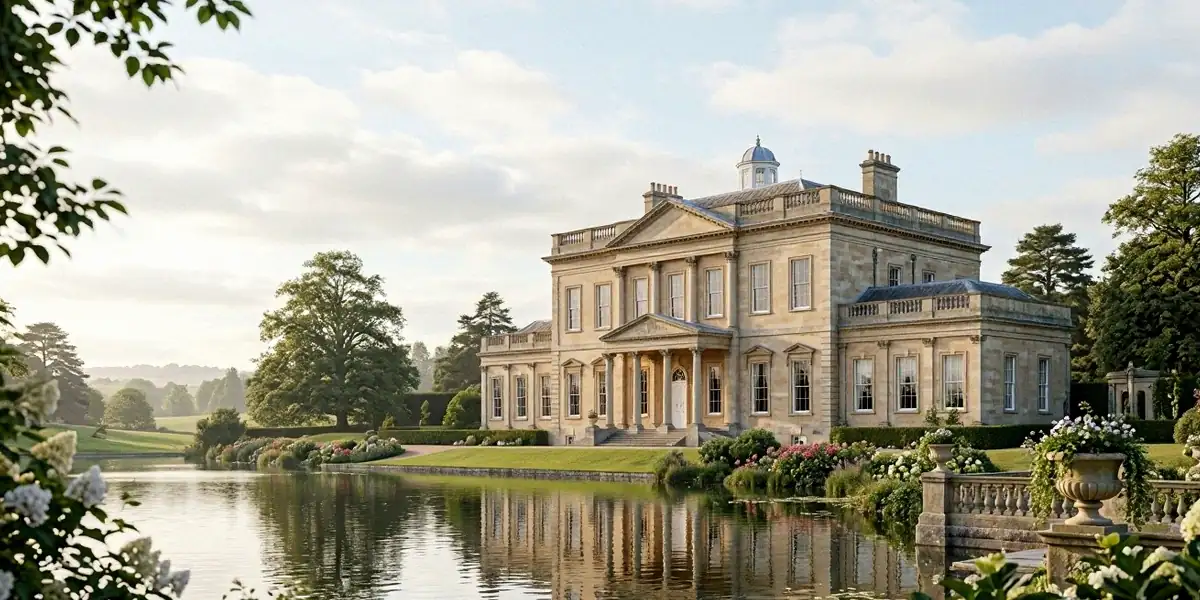
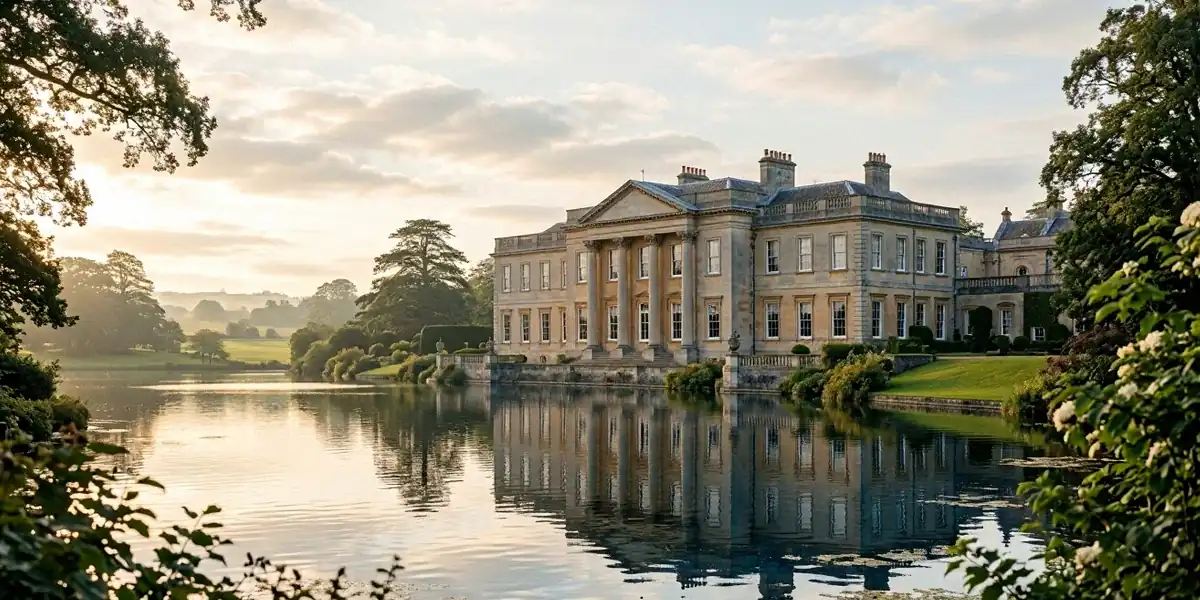
Claremont House, located in Esher, Surrey, became the emotional centre of the Orléans exile. It was not a palace in the French sense — no gilded salons or formal court — but a handsome Georgian country house set in rolling parkland, and it suited the family’s reduced circumstances perfectly.
Claremont’s Royal Connections Before 1848
Claremont already had a remarkable royal pedigree before Louis-Philippe arrived. It had been purchased in 1816 by Leopold of Saxe-Coburg, later Leopold I of Belgium, as a home for his bride Princess Charlotte of Wales, the only legitimate daughter of the future George IV. Charlotte’s death in childbirth the following year turned Claremont into a site of national mourning. Leopold retained the house, and it was he — Queen Victoria’s uncle by marriage — who eventually made it available to the Orléans family. Queen Victoria lent Claremont House to the Orléans family after 1848, a gesture that underlined the closeness between the British court and the exiled French royals.
Louis-Philippe’s Final Years at Claremont
At Claremont, Louis-Philippe lived a quieter life than he had known in Paris. He read, wrote, received occasional visitors and followed French politics from a distance. His health declined steadily, and on 26 August 1850 he died at Claremont House — a fact that gives the building a permanent place in French royal history. He was buried initially in the Roman Catholic chapel at Weybridge, before his remains were eventually moved to Dreux in France.
The Death of Queen Marie-Amélie and the Family’s Departure
Queen Marie-Amélie remained at Claremont after her husband’s death, maintaining a household that became a focal point for the Orléans family and its supporters. She died there in 1866, and with her passing the house lost much of its role as a family anchor. The Orléans exiles gradually dispersed — some to other parts of England, some back to France as political conditions allowed — and Claremont’s chapter as a royal refuge came to an end.
Other English Homes of the French Royals
Claremont was the most famous Orléans residence in England, but it was far from the only one. The family and its wider circle used a surprising number of houses across southern England and London, and some of these addresses are still recognisable today.
Twickenham and the Orléans Exiles
Twickenham was home to several French royal exiles in the 19th century, and the Orléans family had strong connections to the area. Louis-Philippe himself had lived at Twickenham during an earlier exile in the early 1800s, at a house on the edge of the town, before returning to France after 1814. Later Orléans exiles also settled in and around Twickenham, drawn by its pleasant riverside setting and its proximity to London without the noise and expense of the capital.
London Residences of the House of Orléans
Members of the Orléans family also took houses in London, particularly in the fashionable districts of the West End. These addresses served as bases for social calls, political conversations and the endless round of letter-writing that exile diplomacy required. The exact houses changed as finances and circumstances shifted, but the pattern was consistent: a modest London residence for the season, and a country house for the quieter months.
Country Retreats and Lesser-Known Homes
Beyond Claremont and Twickenham, the Orléans circle used a range of smaller country houses across Surrey, Sussex and the Home Counties. Some were rented, some were lent by sympathetic aristocratic friends, and some were occupied by individual family members rather than the whole clan. These lesser-known homes rarely appear in grand histories, but they matter because they show how widely the exile network spread — and how dependent it was on British hospitality.
- Claremont House, Esher, Surrey — the principal Orléans residence after 1848, now a school.
- Twickenham — home to several French royal exiles in the 19th century, including Louis-Philippe in an earlier exile.
- London West End addresses — used seasonally by Orléans family members for social and political purposes.
- Various rented country houses in Surrey and Sussex — used by individual family members and supporters.
Claremont House Today: Visiting and Legacy
Claremont House still stands in Esher, Surrey, and it remains one of the most tangible links between Britain and the French royal exile. Its survival is a reminder that the story of the Orléans family in England is not confined to books.
Claremont House as a School and Heritage Site
Claremont House is now a school, and it has been used for educational purposes for many decades. It holds Grade I listed status, recognising its architectural and historical importance. Because it operates as a working school, access is limited and visits must be arranged with the school in advance. The surrounding parkland, however, is more accessible and offers a sense of the landscape that Louis-Philippe and Marie-Amélie would have known.
How to Visit and What to See Nearby
For UK readers interested in visiting or researching Claremont, a little planning goes a long way. Esher is easily reached from London by train, and the area around Claremont offers several other historic sites worth combining with a visit.
- Contact the school directly to ask about any open days or arranged visits.
- Check the National Heritage List for England for the Grade I listing details.
- Combine a trip with nearby Claremont Landscape Garden, managed by the National Trust.
- Visit the Roman Catholic chapel at Weybridge, where Louis-Philippe was first buried.
- Explore Twickenham’s riverside for the earlier exile connections.
Why These English Homes Matter for French History
It is tempting to treat Claremont and the other English homes as colourful footnotes — interesting anecdotes rather than serious history. We think that would be a mistake. These houses shaped the Orléans family’s political networks, cultural life and sense of identity during the years when they had no throne and no country.
Political Networks and Exile Diplomacy
From Claremont, Louis-Philippe and his family maintained a web of contacts across Europe. Letters went back and forth to supporters in France, to sympathetic courts in Belgium and Spain, and to British politicians who might be persuaded to take an interest in Orléans fortunes. The house was not just a home; it was a headquarters for a political movement in waiting.
Cultural Exchange Between France and England
The exile years also produced a genuine cultural exchange. French royal exiles brought with them tastes in art, music, cuisine and conversation that left traces in English social life, while their children grew up bilingual and bicultural in a way that would have been impossible at the French court. Claremont, in particular, became a meeting point for French and English elites, and its drawing rooms hosted conversations that crossed national boundaries.
Frequently Asked Questions
Where is Claremont House and can you visit it?
Claremont House is in Esher, Surrey, and it is now a school. Because it is a working school, general public access is limited, but you can contact the school about arranged visits and open days. The surrounding parkland and the nearby Claremont Landscape Garden are more accessible.
Did Louis-Philippe die in England?
Yes. Louis-Philippe died at Claremont House in 1850, after two years of exile in England following the 1848 revolution. He was initially buried at Weybridge before his remains were later moved to Dreux in France.
Who lent Claremont House to the Orléans family?
Queen Victoria lent Claremont House to the Orléans family after 1848. The house had previously been purchased by Leopold I of Belgium, Queen Victoria’s uncle by marriage, and it passed into the arrangement that gave the exiled French royals a home in Surrey.
What is the House of Orléans?
The House of Orléans is a cadet branch of the French royal family, descended from a younger son of Louis XIII. It came to the throne in 1830 under Louis-Philippe and lost power in the 1848 revolution, after which many of its members went into exile in England.
Why did French royals settle in Twickenham?
Twickenham was home to several French royal exiles in the 19th century because it offered a pleasant riverside setting close to London but away from its noise and expense. Louis-Philippe himself lived there during an earlier exile in the early 1800s, and later Orléans exiles followed the same pattern.
Claremont House and the other English homes of the French royals are far more than curiosities. They are the places where the House of Orléans lived, grieved, plotted and adapted during its years of exile, and they remain essential sites for anyone who wants to understand French royal history from a British perspective. Whether you are researching Louis-Philippe, exploring Normandy castles and their royal connections, or simply following the trail of the Orléans family across southern England, these houses repay close attention.